Foxconn and Intel were expected to show up in AI infrastructure from different ends of the supply chain. Instead, their June 4 agreement in Taipei puts them in the same design room.
The partnership pairs Foxconn, the world’s largest contract electronics manufacturer, with Intel to jointly develop next-generation AI infrastructure and intelligent computing platforms, according to CryptoBriefing. The core signal is not “another AI server deal.” It is a push to package chips, racks, cooling, interconnects, and manufacturing scale — pressure also visible in TSMC's chip price pain — as one product strategy.
Foxconn and Intel are betting the AI server fight moves beyond single chips
The obvious assumption is that AI hardware competition starts and ends with accelerators. This deal points somewhere broader: rack-level systems, edge computing platforms, and custom chip solutions built around Intel silicon and Foxconn manufacturing.
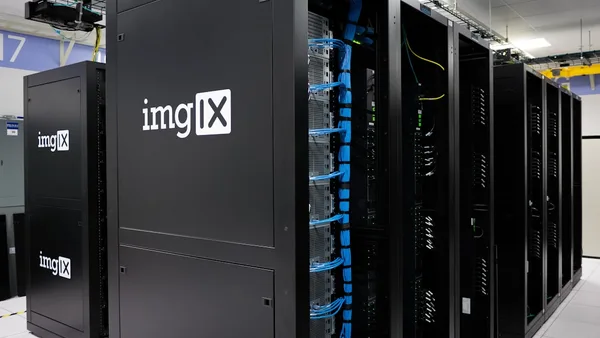
The agreement covers AI data center equipment, including server racks powered by Intel Xeon processors and AI accelerators. It also spans high-speed interconnect technologies, cooling systems, and application-layer work. That matters because AI infrastructure performance is increasingly constrained by the whole machine, not only by the processor inside it.
The supplied material does not name Nvidia or quantify market share. So the cleanest read is not “Intel versus Nvidia” in isolation. MLXIO analysis: this is Intel and Foxconn trying to compete at the system level, where customers judge delivery, thermals, power use, integration, and deployment readiness alongside raw silicon.
A useful before-and-after frame:
- Before: AI hardware was often discussed as a chip race.
- After: This pact frames AI hardware as a rack, factory, supply chain, and deployment race.
- Before: Foxconn could be read mainly as an assembler.
- After: Foxconn is positioning closer to infrastructure design and integration.
- Before: Intel sold components into systems.
- After: Intel gets a partner that can help turn silicon into complete AI platforms.
That system-level pressure is also visible outside the data center. MLXIO has tracked the same shift in client devices through 45 TOPS Bet Turns Asus Zenbook 14 Into AI Chip War and the competitive pressure described in RTX Spark Turns Intel and AMD Into Nvidia's Targets. The Foxconn-Intel deal applies that logic to heavier infrastructure.
Manufacturing scale meets AI compute ambition at the rack
Foxconn brings manufacturing reach, system integration, logistics, and long-standing ties across global technology hardware. Intel brings processor architecture, silicon technologies, Xeon, and AI accelerator assets. The announcement explicitly ties those strengths together.
“Our collaboration with Intel will combine the strengths of both companies across computing platforms, system integration, and global supply chain capabilities,” Foxconn Chairman and CEO Young Liu said in the statement.
The most important phrase is “system integration.” AI infrastructure is not a simple bill of materials. Chips, boards, cooling, power delivery, networking, and rack architecture have to be engineered together. A faster accelerator can lose much of its advantage if the rack cannot feed it data, cool it efficiently, or ship at scale.
| Party | What the source says it brings | Strategic read |
|---|---|---|
| Foxconn | Manufacturing footprint and system integration expertise | Moves closer to higher-value AI infrastructure work |
| Intel | Processor architecture and silicon technologies | Gets a path from chip design into deployed systems |
| Joint focus | AI data center systems, edge platforms, custom chips | Targets full-stack hardware packages, not isolated components |
The edge side is just as important. The companies plan to work on applications beyond traditional data centers, including robotics, smart city infrastructure, and automotive solutions. The source also says they will explore custom chip solutions for these use cases.
MLXIO analysis: that custom-chip angle is the part to watch. If the collaboration stops at Intel-based server racks, it is a manufacturing and go-to-market alliance. If it produces application-specific silicon tied to Foxconn-built systems, it becomes a deeper platform play.
The hard numbers say more about execution risk than market size
The supplied sources do not provide AI infrastructure spending totals, hyperscaler capex figures, rack pricing, or accelerator market share. That limits how far any data-driven claim can go.
The numbers we do have are still useful:
- June 4: Foxconn and Intel formalized the agreement in Taipei.
- June 5, 2026: CryptoBriefing published its report.
- 2025: Supplied company profile data lists Hon Hai Precision Industry revenue at NT$8.103 trillion, operating income at NT$259.223 billion, and net income at NT$189.35 billion.
- No financial terms: The companies did not disclose the value of the collaboration.
- No named customers: The announcement did not identify buyers.
- No launch timeline: The companies did not say when products will ship.
Those omissions are not minor. In AI infrastructure, the distance between a strategic partnership and revenue can be wide. Customers will want named systems, delivery dates, performance data, software support, power metrics, and service commitments.
Foxconn’s scale makes the deal credible. Intel’s silicon makes it technically relevant. But neither automatically creates customer adoption. The first proof point will not be another executive meeting. It will be a product, a buyer, or a deployment.
Intel gets design-stage access; Foxconn gets a role beyond assembly
The deal gives Intel a tighter path into system design. Instead of selling silicon that others package later, Intel can work with Foxconn earlier in the hardware stack. That can matter for interconnects, thermal design, rack layout, and edge deployments where the hardware has to fit specific physical environments.
For Foxconn, the shift is equally clear. Hon Hai Technology Group’s own public positioning says it is investing in electric vehicles, digital health, and robotics, while developing artificial intelligence, semiconductors, and next-generation communication technologies. The Intel partnership fits that direction: fewer commodity assembly economics, more integrated infrastructure work.
There is historical resonance, but it should not be overstated. Supplied background material notes that Intel selected Foxconn to manufacture Intel-branded motherboards in 2001. The new agreement is more ambitious. It reaches into AI data center systems, edge computing platforms, and custom chips.
MLXIO analysis: the commercial prize is not simply building more servers. It is shaping reference designs and integrated systems that customers can deploy with less engineering burden. If Foxconn and Intel can reduce friction between silicon selection and actual rollout, the partnership has a clearer reason to exist.
Customers will judge the pact by proof, not partner logos
Different buyers will read this announcement differently.
For large AI infrastructure buyers, the appeal is potential supply diversity and more integrated rack-scale options. That is an inference, because the companies did not name customers. But it follows directly from the stated focus on data center systems, interconnects, cooling, and energy efficiency.
For enterprises, edge deployments may be the more practical opening. Robotics, smart cities, and automotive systems often need AI compute outside centralized data centers. Those environments place a premium on integration, thermals, and reliability.
For developers and AI startups, the impact is less direct. The announcement does not promise cheaper compute or wider access. Still, if the partnership eventually produces more deployable inference infrastructure, it could widen hardware choices for teams building AI applications outside the largest cloud environments.
For blockchain-adjacent and digital asset investors, the connection is thematic rather than immediate. AI compute, high-performance data centers, and decentralized infrastructure are increasingly discussed together, but this specific partnership does not announce any crypto, DePIN, or blockchain product. Treat that as an adjacent watch area, not a stated business line.
Three 2026 paths depend on products, customers, and custom silicon
The base case is straightforward: Foxconn and Intel gain traction in selected AI server, enterprise, and edge infrastructure segments, while the broader AI hardware race remains highly contested. In this path, the partnership matters, but it does not instantly reset competitive dynamics.
The bullish case requires stronger evidence. Named customers, rack-level systems, measurable energy-efficiency claims, and custom chips for automotive or edge AI would show that this is more than a supply-chain alliance. A customer announcement would be especially important because none has been disclosed.
The bearish case is also clear. If Intel’s processors and accelerators do not meet buyer requirements, or if Foxconn cannot turn joint designs into differentiated systems, the pact could settle into a conventional manufacturing relationship with better branding.
The next evidence to track: named products, customer wins, deployment timelines, performance disclosures, and revenue contribution. If those arrive, the thesis strengthens: AI infrastructure competition is moving from single components to full systems. If they do not, the June 4 agreement remains strategically interesting but commercially unproven.
The Bottom Line
- Foxconn and Intel are targeting AI infrastructure as a full-system challenge, not just a chip competition.
- The deal could help Intel push its Xeon processors and AI accelerators into more integrated data center deployments.
- Foxconn’s manufacturing scale may become more strategic as AI customers prioritize delivery, cooling, and rack-level integration.