Scientists Crack Open the Physics of Crushing Soda Cans
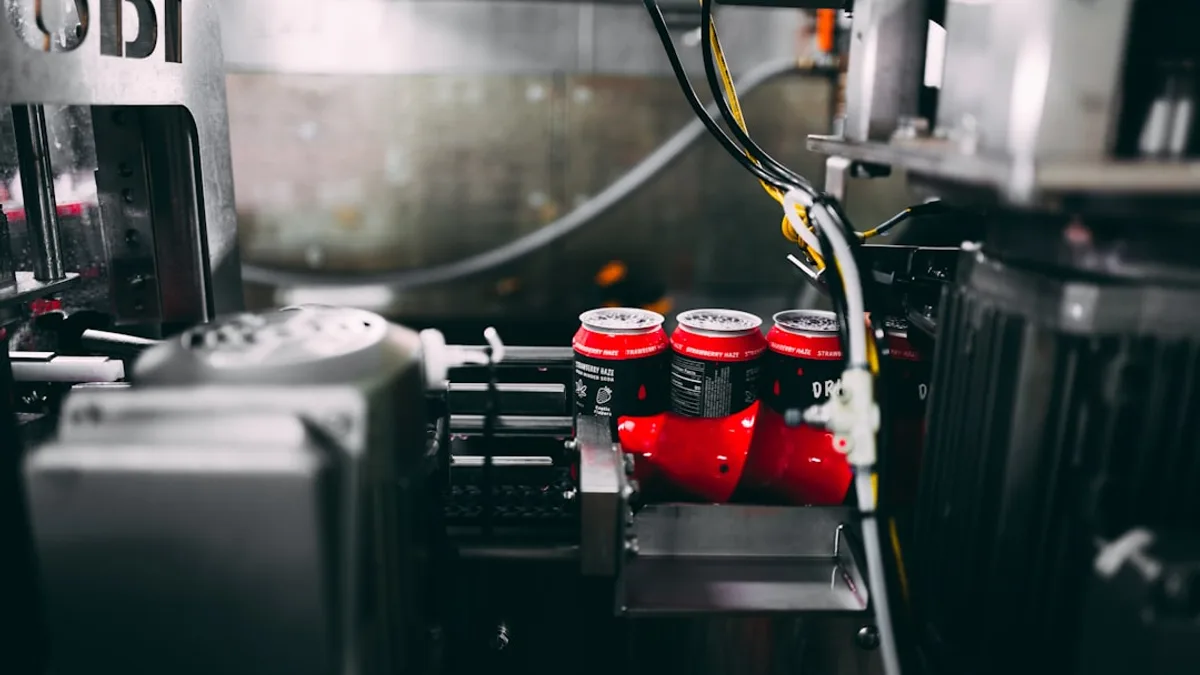
Crushing a soda can sounds like child’s play—until you try to predict exactly when the cylinder will collapse. Researchers have now mapped the critical thresholds at which an aluminum can buckles, revealing how small changes in shape, thickness, or even the way you press can mean the difference between a gentle dent and a loud implosion. These experiments don’t just satisfy curiosity; they unlock insights into material strength and failure that ripple across engineering, manufacturing, and safety design.
What makes the can so instructive is its perfect simplicity: a thin-walled cylinder filled with air or liquid, built to withstand pressure from within—but vulnerable to the right squeeze. Physicists used high-speed cameras and pressure sensors to measure how force travels through the metal, pinpointing the moment instability sets in. Fluid dynamics enters the picture when contents are shaken, chilled, or agitated—subtle differences in internal pressure change how the can crumples. The team found that even a 5% decrease in wall thickness can halve the force needed to collapse a can, underscoring the razor-thin margin for error in mass manufacturing.
While this may sound academic, the findings have practical bite. Engineers designing pipelines, car frames, or even spacecraft hulls face similar challenges on a bigger scale. Understanding how structures fail under pressure means safer buildings and vehicles—and fewer disastrous surprises. According to Ars Technica, the research also hints at new ways to recycle metals more efficiently, since knowing exactly how and when a can will fold could optimize crushing and sorting processes in recycling plants.
Dolphins Outpace Olympic Swimmers—And Physics Textbooks
Dolphins can rocket through water at speeds topping 25 miles per hour, leaving Olympic swimmers in their wake and baffling physicists for decades. For years, models suggested dolphins should generate far less thrust than their real-world performance indicated, a discrepancy dubbed “Gray’s paradox.” Recent research has finally closed the gap, showing that dolphins’ muscle power, skin texture, and even their micro-movements all play a role in slicing through water with minimal drag.
High-resolution motion capture and water flow analysis revealed that dolphins exploit the elasticity of their bodies, bending in precise patterns that channel energy into forward motion while keeping turbulence at bay. Their skin, constantly shedding and regenerating, minimizes friction and reduces the formation of drag-inducing vortices. In controlled swim tunnels, dolphins demonstrated the ability to adjust their stroke timing and depth to maintain optimal flow, a feat that human swimmers can only dream of.
These adaptations offer more than just bragging rights. Speed allows dolphins to escape predators, hunt agile prey, and travel vast distances—evolutionary advantages that shaped their streamlined forms over millions of years. But the lessons don’t stop in the ocean. Engineers studying dolphin hydrodynamics have borrowed tricks for designing quieter submarines, more efficient ship hulls, and even next-gen swimwear. The research, highlighted by Ars Technica, underscores how nature’s solutions to physical challenges often outpace our own—and how biomimicry continues to inspire technological leaps.
Urine: The Unexpected Medium for Mushroom Messaging
Urine isn’t just waste—it’s a fungal phone line. New research has shown that some mushrooms respond to chemical cues in animal urine, using the cocktail of nutrients and signals to trigger spore release or growth spurts. This surprising communication channel came to light when scientists noticed mushrooms fruiting in unusual abundance near animal latrines, prompting controlled experiments with synthetic urine compounds and time-lapse imaging.
Analytical chemistry identified key molecules—especially urea and ammonia—that act as signals in the fungal world. When exposed to these compounds, certain fungi ramped up hyphae growth or accelerated spore dispersal, suggesting they “listen in” for signs of passing mammals. This makes evolutionary sense: mushrooms that time their reproductive cycles to coincide with animal movement boost their odds of hitching a ride to new habitats, or tapping into fresh sources of nutrients.
The implications extend beyond quirky biology. Understanding these chemical dialogues could reshape how we cultivate edible or medicinal mushrooms—by mimicking natural cues, growers may coax faster or more reliable yields. The findings also offer a window into the hidden networks that shape forest health, where nutrient cycles and species interactions depend on subtle chemical exchanges. As Ars Technica reports, the research raises new questions about how many other “waste” products might serve as messages in the underground world.
Five More Stories That Defy Scientific Assumptions
Science rarely follows a straight line, and this week’s lesser-known studies prove it. Researchers in Japan have created a transparent wood by infiltrating natural fibers with polymers, producing a shatter-resistant material that could rival glass in strength and insulation. Meanwhile, a gene-editing experiment in corn has boosted drought tolerance by 30%, offering a glimpse into climate-ready agriculture that doesn’t rely on traditional breeding cycles.
In physics, a team has detected quantum entanglement in a living virus for the first time, blurring the boundaries between quantum mechanics and biology. Over in archaeology, new dating methods put the oldest known cave art in Europe at 51,000 years—almost 10,000 years older than previous estimates, rewriting the timeline of human creativity. Finally, a study on urban bats tracked their navigation using city lights, revealing that artificial lighting reshapes animal behavior in ways city planners rarely consider.
These stories crisscross disciplines—materials science, genetics, quantum physics, archaeology, urban ecology—proving that curiosity never sits still. Each discovery opens new avenues for research, products, or policy, and signals that the most important questions often hide in plain sight.
Science Is Thriving at the Fringes—And That’s Where Tomorrow’s Breakthroughs Are Brewing
What these stories share isn’t just novelty; it’s a clear signal that research thrives when it crosses boundaries—between disciplines, organisms, and even definitions of “waste.” Whether it’s engineers borrowing from dolphins, mycologists decoding mushroom “conversations,” or physicists learning from crushed cans, the future of discovery lies at these intersections.
The push toward interdisciplinary science is more than a trend. Funding agencies are now prioritizing projects that bring together biologists, chemists, data scientists, and engineers, betting that the next big leap will come from unlikely collaborations. The rapid spread of preprints and open-access platforms accelerates the cross-pollination of ideas, shrinking the lag between discovery and application. For readers, this means that the most surprising advances may come from fields you’ve never followed.
There’s a practical lesson here: staying informed about science isn’t just for specialists. The next material to reshape construction, the next leap in sustainable agriculture, or the next breakthrough in quantum biology may emerge from a story that once flew under the radar. Savvy investors, policymakers, and entrepreneurs are already mining these overlooked studies for early signals. As this week’s roundup shows, the real action in science often starts where curiosity outpaces convention—and where no one is afraid to crush a few cans, literally or metaphorically, to see what happens next.
Why It Matters
- Understanding material failure in soda cans can inform safer engineering of pipelines, vehicles, and buildings.
- Small manufacturing variations can have a huge impact on product reliability and safety.
- These findings could optimize recycling processes, making metal reuse more efficient and environmentally friendly.