MLXIO
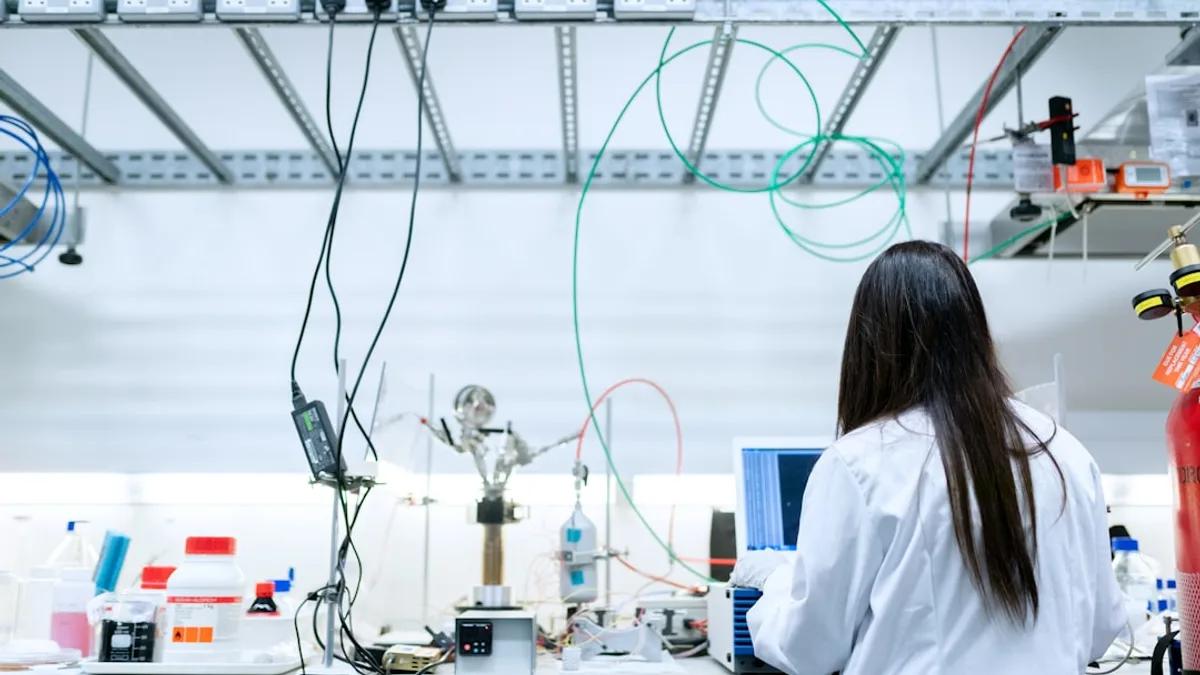
woman in white long sleeve shirt sitting on chair
ScienceJune 3, 2026· 6 min read· By MLXIO Insights Team

World's Biggest Private Laser Bets on Fusion Payoff

Share

MLXIO Intelligence

Analysis Snapshot

57
Moderate
Confidence: LowTrend: 10Freshness: 100Source Trust: 85Factual Grounding: 91Signal Cluster: 20

Moderate MLXIO Impact based on trend velocity, freshness, source trust, and factual grounding.

Thesis

High Confidence

Xcimer Energy’s Phoenix activation is a meaningful private laser-fusion hardware milestone, but the article frames it as far from demonstrating a working fusion power plant.

Evidence

  • Xcimer fired up its Phoenix laser system, which it says is the world’s largest privately owned laser.
  • Phoenix is reported to use a krypton-fluoride laser generating over 1 kilojoule of energy at full strength with a 38-meter-long core.
  • Xcimer is modeling its approach on the National Ignition Facility, which in December 2022 showed a controlled fusion reaction could release more power than was needed to ignite it.
  • Xcimer says a plant-scale system could need to exceed 12 megajoules, far above Phoenix’s reported output.

Uncertainty

  • The TechCrunch report did not specify where Phoenix is installed.
  • Phoenix activation is not evidence of fusion ignition or a working power plant.
  • The article does not establish when or whether Xcimer can scale from kilojoule-class hardware to plant-scale megajoule requirements.

What To Watch

  • Demonstrations that Phoenix can reliably deliver its stated laser energy in test conditions.
  • Progress toward Xcimer’s planned two-laser plant architecture and pulse-compression system.
  • Evidence that Xcimer can scale beyond 1 kilojoule toward the stated 12-megajoule plant-scale requirement.

Verified Claims

Xcimer Energy fired up its Phoenix laser system, which the company says is the world's largest privately owned laser.
📎 The article states that Xcimer fired up its Phoenix laser system and says it is the world's largest privately owned laser, according to TechCrunch.High
Phoenix's activation is a hardware milestone, not evidence of a working fusion power plant or a fusion energy breakthrough.
📎 The article says the activation should not be confused with a fusion energy breakthrough and calls it a hardware milestone.High
Xcimer's Phoenix krypton-fluoride laser reportedly generates over 1 kilojoule of energy at full strength and has a 38-meter-long core.
📎 The article quotes Xcimer telling TechCrunch that Phoenix's krypton-fluoride laser generates over 1 kilojoule and that its core is 38 meters long.High
Xcimer is modeling its laser fusion strategy on the National Ignition Facility, which used 192 laser beams and achieved a controlled fusion reaction in December 2022 that released more power than was needed to ignite it.
📎 The article says Xcimer is modeling its strategy on NIF and describes NIF's December 2022 result and 192 laser beams.High
Xcimer says a plant-scale laser fusion system could need to exceed 12 megajoules, far above Phoenix's reported over-1-kilojoule output.
📎 The article states Phoenix generates over 1 kilojoule and that Xcimer says a plant-scale system could need to exceed 12 megajoules.High

Frequently Asked

What did Xcimer Energy turn on?

Xcimer Energy fired up Phoenix, a privately owned krypton-fluoride laser system that the company says is the world's largest privately owned laser.

Did Xcimer's Phoenix laser achieve fusion ignition?

No. The article describes Phoenix's activation as a hardware milestone, not a fusion energy breakthrough or proof of a working power plant.

How powerful is Xcimer's Phoenix laser?

According to Xcimer as cited in the article, Phoenix generates over 1 kilojoule of energy at full strength and has a 38-meter-long core.

How does Phoenix compare with a plant-scale fusion system?

Phoenix is reported at over 1 kilojoule, while Xcimer says a plant-scale system could need to exceed 12 megajoules.

What fusion facility is Xcimer using as a model?

Xcimer is modeling its strategy on the National Ignition Facility, which used 192 laser beams and in December 2022 produced a controlled fusion reaction that released more power than was needed to ignite it.

Updated on June 3, 2026

Laser fusion’s defining proof point came from a government megafacility; Xcimer Energy just switched on a privately owned laser built to chase that same physics.

The fusion startup fired up its Phoenix laser system on Wednesday, which the company says is the world’s largest privately owned laser, according to TechCrunch. The report did not specify where Phoenix is installed, and the activation should not be confused with a fusion energy breakthrough. This is a hardware milestone, not proof of a working power plant.

Xcimer fires up Phoenix, but ignition is still the bigger test

Xcimer is modeling its fusion strategy on the National Ignition Facility, the government laser system that in December 2022 proved a controlled fusion reaction could release more power than was needed to ignite it.

NIF did that by training 192 laser beams on a fuel target smaller than a pencil eraser. The lasers struck a gold target, converting energy into X-rays that compressed the fuel pellet inside until atoms fused and released energy.

Xcimer’s bet is narrower and more commercial: use more powerful, less complex lasers to turn that concept into something profitable. Phoenix is the first major hardware step described in the TechCrunch report.

Xcimer told TechCrunch that Phoenix’s krypton-fluoride laser generates over 1 kilojoule of energy at full strength, and that its core is 38 meters long.

That scale supports the company’s “largest privately owned” claim. It also shows how far Phoenix remains from a commercial fusion plant. Xcimer says a plant-scale system could need to exceed 12 megajoules.


Phoenix puts private laser fusion hardware into a bigger category

Laser size matters in this branch of fusion because the target has to be compressed fast and hard enough to trigger useful reactions. Xcimer’s planned power plant would use two lasers firing microsecond-long pulses, then feed that light through a compression system that delivers the energy to the target in nanoseconds.

The physics logic is direct: the faster the fuel is compressed, the better the odds of generating usable fusion reactions. Phoenix is not that plant. It is a step toward testing whether Xcimer can build the laser chain needed for one.

The company’s system uses excimer amplification, a laser approach similar to systems used in semiconductor manufacturing, but significantly more powerful in this implementation. That is the technical bridge Xcimer is trying to build: from industrial laser know-how to fusion-scale energy delivery.

A quick comparison shows why the new system is notable, but also why the claim needs careful reading:

System Reported role Reported scale or milestone
Xcimer Phoenix Private laser system for Xcimer’s fusion roadmap Over 1 kilojoule, 38-meter core
National Ignition Facility Laser-driven fusion proof point 192 beams; December 2022 controlled reaction released more power than required to ignite it
NSF ZEUS U.S. national user laser facility for research Two petawatts in a 25-quintillionths-of-a-second pulse, according to NSF

Those figures are not interchangeable. Phoenix’s reported figure is pulse energy. ZEUS’s headline figure is peak power. NIF’s significance, in the cited material, is the ignition result.

MLXIO analysis: Phoenix matters because it shifts part of laser-fusion development into private hardware ownership at a scale that can no longer be dismissed as tabletop R&D. But the gap between 1 kilojoule and a possible 12 megajoules plant-scale requirement is the story’s central tension.

The company is betting simpler, stronger lasers can beat megafacility complexity

The assumption behind NIF-style fusion has long been that enormous laser systems are required to create the conditions for ignition. Xcimer is not rejecting that premise. It is trying to redesign the path around it.

The reality revealed by Phoenix is that Xcimer wants fewer, more powerful laser channels rather than NIF’s 192-beam architecture. The supplied material does not say whether that design will prove cheaper, more efficient, or easier to operate. It only establishes that Xcimer is pursuing that route.

The before-and-after is clean:

  • Before: The benchmark for laser-driven fusion came from a national facility with 192 laser beams.
  • Now: Xcimer has activated a privately owned krypton-fluoride system it says is the largest of its kind.
  • Next: The company wants a 2028 prototype before moving to a larger system intended to produce at least as much power as it consumes.

That last target is the hard one. Turning on Phoenix shows Xcimer can build and operate a large laser. It does not yet show that the system can repeatedly compress targets, survive operating cycles, or support power-plant economics.

Repeatable shots, not size claims, will decide Phoenix’s value

Xcimer’s next phase is likely to be judged by performance data, not the headline size of the hardware. The supplied material points to the needed chain: laser pulses, compression, nanosecond delivery, target interaction, and eventually fusion output.

Several technical questions remain open from the available reporting:

  • Efficiency: How much wall-plug power is required for useful laser output?
  • Repetition: Can the system fire often enough for a power-plant concept?
  • Targets: Can fuel targets be produced and aligned reliably?
  • Thermal load: Can repeated high-energy operation be managed without degrading hardware?
  • Net-energy relevance: Can a later system produce at least as much power as it consumes?

None of those answers arrived with Wednesday’s switch-on. Phoenix is the platform that could generate them.

Xcimer’s stated timeline is aggressive but specific. The company hopes to complete a prototype in 2028, then work on a larger system that it hopes will produce at least as much power as it consumes. It is planning its first commercial-scale power plant sometime in the mid-2030s.

The next credibility test is measured output, not a bigger room-sized laser

For Xcimer, Phoenix gives the company a tangible asset in a field where claims often run ahead of demonstrated hardware. A 38-meter laser core is difficult to ignore. But fusion credibility compounds only when tests become repeatable and independently legible.

The useful watch item now is whether Xcimer publishes performance results that connect Phoenix’s laser output to the fusion conditions its plant design requires. If the company can show reliable pulse compression and target performance, Phoenix becomes more than a size record. If not, it remains an impressive machine still waiting for the physics and engineering to catch up.

The Bottom Line

  • Phoenix shows private fusion companies are beginning to build hardware at meaningful scale.
  • The milestone does not prove commercial fusion power is close, since ignition and plant-scale energy remain much larger challenges.
  • Xcimer’s approach could reshape laser fusion if simpler, more powerful systems can make the economics work.


Phoenix vs. National Ignition Facility vs. Plant-Scale Goal

SystemOwner/TypeKey DetailStatus
PhoenixXcimer Energy / privateKrypton-fluoride laser generating over 1 kilojoule; core is 38 meters longTurned on as a hardware milestone
National Ignition FacilityGovernment facilityUsed 192 laser beams to achieve fusion ignition in December 2022Proved controlled fusion could release more power than needed to ignite it
Plant-scale Xcimer systemPlanned commercial systemCould need to exceed 12 megajoulesNot yet demonstrated

Laser Energy: Phoenix vs. Plant-Scale Target

Phoenix
kJ1
Plant-scale target
kJ12,000
MLXIO

Written by

MLXIO Insights Team

Algorithmic Research & Human Oversight

Powered by advanced algorithmic research and perfected by human oversight. The Insights Team delivers highly structured, cross-verified analysis on emerging tech trends and digital shifts, filtering out the fluff to give you high-fidelity value.

Related Articles

two black fish finders on a fishing boat
TechnologyAug 5, 2026

Apple CarPlay Grabs the Helm on 2027 Pontoon Boats

Apple CarPlay and Android Auto are coming standard to select 2027 Crest and Balise pontoons with Savvy Navvy navigation.

7 min read

a person holding a smart phone in their hand
TechnologyAug 4, 2026

18-Hour Motorola Razr Fold Leaves Samsung Chasing Hard

Motorola’s Razr Fold hit 18h22m browsing, beating Samsung’s Galaxy Z Fold7 by about four hours.

7 min read

person clicking Apple Watch smartwatch
TechnologyAug 4, 2026

51 New Workout Modes Fix Amazfit Helio Strap's Big Gap

Amazfit Helio Strap firmware 3.22.0.1 adds 51 workout modes, VO2 Max tweaks and phased global rollout via Zepp.

5 min read

Nightstand with a lamp, clock, and chargers.
TechnologyAug 4, 2026

ChargeUltra G4 Bets $40 Can Kill Nightstand Clutter

ChargeUltra G4 packs a charger, clock, alarms, and light into a $40 Kickstarter—but delivery is not due until October 2026.

7 min read

icon
TechnologyAug 4, 2026

WhatsApp Group Chats Grab an @all Panic Button Today

WhatsApp is adding @all alerts, tighter poll controls and easy spin-off groups to stop decisions from getting buried in busy chats.

6 min read

space gray iPhone X
TechnologyAug 4, 2026

120x Zoom Leak Throws Pixel 11 Pro Into Camera War

A Pixel 11 Pro leak points to 120x zoom, G6 silicon branding, and Gemini features ahead of Google’s August 12 event.

7 min read

black and white headphones on white table
TechnologyAug 4, 2026

€299 Leak Says Momentum True Wireless 5 Dodges Price Hike

A leak says Sennheiser’s Momentum True Wireless 5 will keep the €299.90 price, add five colors, and possibly launch August 19.

5 min read

brown concrete building
AI / MLAug 4, 2026

75 PhD Defenses Put Alexander Rakhlin Atop MIT SDSC

Alexander Rakhlin will lead MIT SDSC, making mathematical rigor and AI safety central to the center's next chapter.

7 min read

person wearing silver aluminium case Apple Watch with white Sports Band
TechnologyAug 4, 2026

Garmin CIRQA Nails Deep Sleep — But Fumbles REM Badly

Garmin CIRQA impressed on deep sleep, but weak REM detection keeps it from being a full sleep-tracking win.

7 min read

two pens near MacBook Air
TechnologyAug 4, 2026

EU Pressure Cracks iPhone Clipboard Open to Windows PCs

Apple will open iPhone clipboard syncing to Windows PCs in the EU, but the feature may not arrive until fall 2027.

8 min read

Stay ahead of the curve

Get a weekly digest of the most important tech, AI, and finance news — curated by AI, reviewed by humans.

No spam. Unsubscribe anytime.