
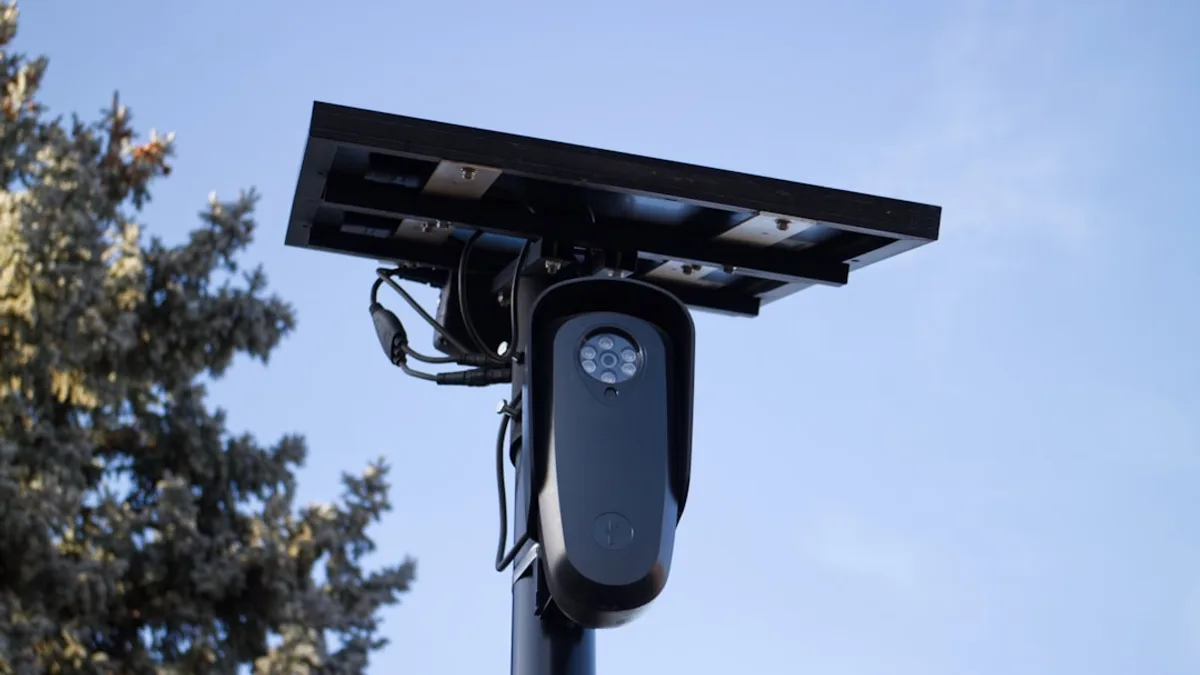
A 7-year-old private camera company should not get to benefit from the normalization of police surveillance across the U.S. and then treat abuse as somebody else’s paperwork problem.
That is the core problem with Flock and CEO Garrett Langley’s reported response to concerns about how police use the company’s data. In an interview cited by Notebookcheck, Langley answered a question about controlling police use of Flock data by saying:
“I don't think its my job to”
That line deserves scrutiny because Flock is not operating in a harmless consumer-tech vacuum. It is selling camera-related tools into a growing surveillance environment, where data can influence police decisions and real people can face consequences. The danger is not only that systems or users get things wrong. It is that everyone in the chain can point somewhere else when they do.
A 7-Year-Old Camera Company Is Helping Normalize Always-On Police Surveillance
Flock cameras are under increased scrutiny as police departments across the U.S. rely more heavily on private surveillance tools, according to the source material. The concern is not limited to one city, one department, or one bad search. The source describes a broader pattern: the U.S. surveillance state is growing, and people can be wrongly pulled into criminal investigations.
That is where Flock’s age and role matter. A single camera on a road is one kind of tool. A private company helping expand police access to surveillance data is another. Scale changes the civil liberties math, even when the exact boundaries of that scale are not fully detailed in the source.
The source does not provide a complete map of Flock deployments, a precise number of agencies using the system, or a full technical description of every product involved. That matters, because those details should not be assumed. But the broader issue remains: Flock is presented as part of a wider shift toward private surveillance infrastructure being used by public law enforcement.
This is not the same kind of camera story as ordinary consumer hardware coverage about specs, sensors, or battery tradeoffs. Flock’s cameras sit closer to law enforcement decisions. The output can become part of a stop, a citation, a search, an investigation, or another official action. That makes accountability more than a customer-service issue.
Wrongful Accusations Show How Automated Evidence Can Trap the Wrong Person
The strongest point in the source is not that Flock alone caused every wrongful accusation. It does not say that. The more serious warning is that surveillance tools and police decision-making can combine in ways that leave ordinary people fighting systems that already treated them as suspicious.
That distinction matters. A camera company can argue that police departments make the final decisions. Police departments can argue that they are using available tools. But the person wrongly accused still has to deal with the consequences, and the public still has to ask whether the system was built with enough safeguards.
The source material supports a broader concern: people are being wrongly accused as the surveillance state grows. It does not provide enough support here to rely on detailed outside examples or to present unrelated technologies as if they were proven Flock incidents. The responsible argument is narrower but still serious. When police rely on private surveillance data, errors, misreadings, or overconfident interpretations can become real-world problems.
That imbalance is the point. Surveillance can make suspicion easier to generate while making correction exhausting. If a person is wrongly flagged, wrongly associated with an event, or wrongly pulled into an investigation, the burden may shift onto that person to prove the system should not have pointed at them in the first place.
A company whose tools feed that process cannot credibly pretend the problem begins only after a police officer logs in.
Flock’s Hands-Off Posture Creates an Accountability Gap
Flock’s defense, as described in the source, appears to be that misuse belongs to the police agencies using the data. Langley reportedly said he would contact appropriate officials to address misuse. Notebookcheck’s critique is sharp: in many cases, those “appropriate officials” may be the same police department accused of abusing the data.
That is not enough.
A vendor does not become neutral just because a government customer presses the buttons. Flock designs and sells tools used by police departments, and it benefits when adoption spreads. Even if the source does not establish every detail of Flock’s products, contracts, or internal controls, the accountability question is still unavoidable. If the company’s systems help police gather or use surveillance data, the company has a role in how that data is governed.
Here is the accountability split Flock seems to want versus the one the public should demand:
| Issue | Hands-off vendor model | Responsible surveillance vendor model |
|---|---|---|
| Misuse | Treat it as the police department’s problem | Build reporting channels and consequences into contracts |
| Bad data | Let users decide how much to trust it | Design workflows that discourage blind reliance |
| Public scrutiny | Respond after controversy | Publish clear rules, audits, and misuse findings |
| Deployment | Sell where agencies will buy | Require local debate before expansion |
Analysis: Flock’s commercial incentive is straightforward from the source’s framing — broader police adoption means a larger role in a growing surveillance environment. Its civic obligation is less clear, and that is exactly the problem.
Police Need Investigative Tools, but That Does Not Excuse Blank-Check Location Tracking
The fair counterargument is straightforward: police departments face pressure to solve crimes, enforce traffic rules, and respond faster. Technology can help. No serious debate about Flock should pretend that every camera is illegitimate or that every police use of surveillance is abusive.
But the source material shows why that argument cannot carry the whole case. The broader surveillance state is expanding, and people can be wrongly accused. That is enough to require more than trust, especially when a private vendor says controlling police use is not its job.
Those are not abstract anxieties. They are governance problems. If a person is wrongly identified, wrongly investigated, or wrongly forced to explain data they did not create and cannot easily inspect, the harm is already real. The question is whether the system was built to prevent that harm, detect it quickly, and correct it transparently.
Public safety does not require a culture where vendors disclaim responsibility and police departments treat surveillance outputs as functionally infallible. The public can accept investigative technology and still reject sloppy governance. Those positions are not in conflict.
Public Backlash Shows Why Disclosure Matters
The source frames Flock as part of a broader dispute over surveillance, police power, and accountability. It does not provide enough support here to assert specific claims about outside mapping projects, state contract cancellations, or named campaigns against the company. Those details should not be treated as established without stronger sourcing.
What is established is the public concern. If communities cannot easily see where surveillance cameras are installed, who has access, and how data is used, backlash becomes predictable. A company that builds police-facing surveillance infrastructure should expect public criticism and public demands for limits.
Flock should not wait for regulators or city councils to force basic guardrails. The company can act now by supporting clearer public disclosure, documented misuse procedures, independent audits, and tighter contractual consequences for agencies that abuse access. It can also design its systems to remind users that camera data and automated alerts, where used, are leads, not verdicts.
Some specifics remain unclear from the supplied source: the exact contractual terms Flock uses, the technical controls available to agencies, the scope of public disclosure, and how often misuse results in penalties. Those are precisely the questions city councils and state lawmakers should ask before approving or renewing contracts.
City Councils Should Treat Flock Contracts Like Surveillance Policy, Not Procurement
The practical response starts locally. Before more Flock cameras become permanent infrastructure, city councils, police boards, and state lawmakers should require public debate, sunset clauses, limits on data access, and clear procedures for residents who are wrongly flagged.
Residents should ask simple questions before any expansion:
- Access: Which agencies can view or request the data?
- Purpose: Which uses are banned, not merely discouraged?
- Correction: How does an innocent person challenge a bad hit or citation?
- Misuse: What happens to officers or agencies that abuse the system?
- Disclosure: Where are cameras deployed, and who approved them?
Flock’s CEO may not think preventing abuse is his job. Fine. Then communities should make it part of the job description before signing the next contract.
Safety and freedom should not be traded away through quiet procurement deals and camera installations nobody meaningfully debated.
Impact Analysis
- Flock’s tools are being used in a broader police surveillance environment where misuse can affect real people.
- The CEO’s reported response raises accountability concerns about who is responsible when surveillance data is abused.
- Private surveillance vendors can shape public policing practices even without the same oversight as government agencies.