Updated: This article has been refreshed to clarify that the GA-2100LXB and GM-2100LXB remain unannounced model-code leaks, not confirmed Casio products, and to add newer context around how far Casio has already moved the 2100 “CasiOak” platform into premium territory.
The Leak Suggests Casio May Stretch the CasiOak Further Upmarket
“This could only mean that Casio is readying a new luxury-accented sub-series within the 2100 family,” Notebookcheck reported after new Casio G-Shock GA-2100LXB and GM-2100LXB model codes surfaced in an Asian watch retailer database.
That remains the core signal. Not a launch. Not a product reveal. A signal.
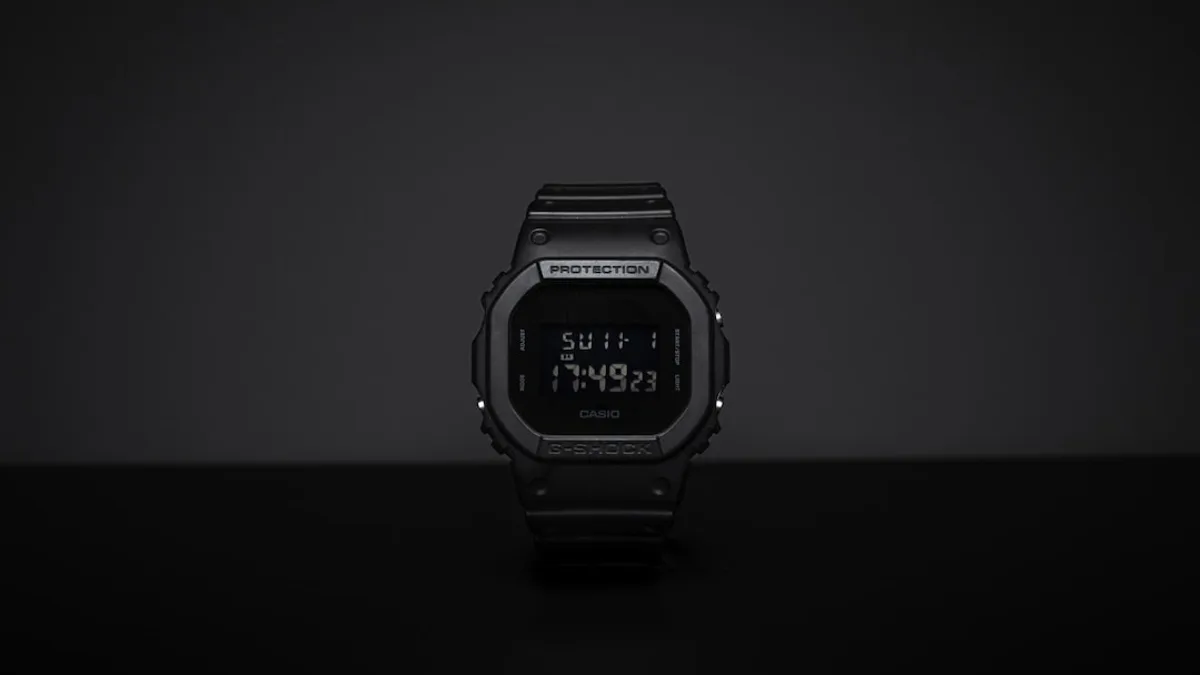
The reported entries point to two possible branches of the same idea: a GA-2100LXB series and a GM-2100LXB variant. In Casio naming, GA-2100 generally refers to the resin CasiOak family, while GM-2100 applies the same basic 2100 design language with a metal-covered case. Notebookcheck says the “LXB” suffix is understood to indicate a luxury design direction, though Casio has not publicly confirmed the models or the meaning of that suffix in this context.
MLXIO analysis: if the suffix interpretation holds, this is less about one more colorway and more about how Casio might position another premium-feeling layer inside a 2100 lineup that already spans resin, metal-covered, full-metal, connected, solar, and high-end executions.
What We Know From the GA-2100LXB and GM-2100LXB Database Leak
The confirmed facts are still narrow. New model codes appeared in an Asian watch retailer database, credited by Notebookcheck to Great G-Shock World. The entries reference both GA-2100LXB and GM-2100LXB.
No official Casio announcement has been made around these specific leaked codes. No product images surfaced with the database entries. No pricing, release window, specifications, colors, materials, or regional availability were confirmed.
That matters because retailer database leaks can precede real launches, but they are not the same as a Casio press release. They can also reflect placeholder records, regional inventory planning, delayed releases, renamed products, or models that change before reaching market. The model codes are the hard data. Everything beyond that should be treated as provisional.
The simultaneous appearance of GA and GM codes is the most interesting part. If the entries are accurate, they suggest Casio may be planning related resin and metal-covered versions rather than a single isolated SKU. That fits the naming split: GA-2100LXB for a resin-case execution and GM-2100LXB for a more premium metal-covered execution.
MLXIO analysis: a dual resin-and-metal launch would let Casio create a two-step premium ladder inside the same visual family. One model could keep the lighter, more familiar GA-2100 formula. The other could lean into the GM-2100’s metal bezel and dressier wrist presence.
Why It Matters: Casio’s 2100 Family Is Already a Sales Pillar
The leak matters because the 2100 family is not a marginal G-Shock branch. Since the GA-2100 launched in 2019, the octagonal “CasiOak” silhouette has become one of Casio’s most recognizable modern designs.
The original GA-2100 earned its following through a thin profile, tough Carbon Core Guard structure, accessible pricing, and an octagonal bezel that enthusiasts quickly linked to luxury sport-watch design. Casio then expanded the platform across sizes, finishes, and price points.
That expansion now includes resin GA-2100 models, smaller GMA-S2100 variants, Bluetooth and solar-equipped GA-B2100 models, metal-covered GM-2100 models, full-metal GM-B2100 references, and ultra-premium MR-G B2100 executions. In other words, Casio has already proven that the 2100 shape can carry everything from entry-level resin G-Shocks to watches priced far above the original CasiOak.
That newer context changes how the LXB leak should be read. A “luxury-accented” GA-2100LXB or GM-2100LXB would not be Casio’s first attempt to push the CasiOak upmarket. Instead, it would likely sit somewhere within the brand’s broader ladder of premium styling, special finishing, and material upgrades.
MLXIO analysis: the opportunity is obvious. Casio can keep using a design language buyers already understand while creating new reasons to trade up. The risk is just as clear: if LXB adds only cosmetic changes, it may feel redundant in a lineup that already has many premium-looking 2100 options.
From Utility Icon to Style Object
The CasiOak’s rise matters because the 2100 design does two jobs for Casio. It remains a functional G-Shock, but it also operates as a style object.
That dual identity is the platform’s strength. The octagonal case is instantly recognizable to enthusiasts, while the range of resin, metal-covered, full-metal, and premium references lets Casio move the same design language across different budgets and buyer types.
That is why the GA-2100LXB and GM-2100LXB codes are more consequential than a routine SKU leak. If real, they may indicate Casio sees room for another design-led sub-series between standard models and higher-end metal references.
Casio has also been using color, finishing, and surface treatment to keep familiar G-Shock shapes fresh. MLXIO recently covered the brand’s style-led approach in Casio Sparks Hype with Rainbow Vapor G-Shock GM-S5600XG-1, another example of how a recognizable G-Shock case can be repositioned through finish and visual execution.
MLXIO analysis: the LXB models will need more than a premium-sounding suffix. Collectors will look for meaningful differences — upgraded finishing, dial texture, strap or bracelet changes, packaging, limited distribution, or a clear design theme. Without that, the watches could be read as another cosmetic refresh in an already crowded family.
Collectors, Retailers, and Casual Buyers Will Read the Leak Differently
Collectors will likely focus on what “LXB” actually buys. Does it mean special finishing? Different hardware? A new dial treatment? A bracelet option? A limited edition? A market-specific release? Without images or specifications, there is no way to judge whether these are substantial upgrades or simple styling exercises.
Retailers would have a more straightforward incentive if the watches launch. Recognizable model codes tied to the CasiOak shape are easier to explain than unfamiliar designs, especially if the watches give buyers a visible step up from a standard GA-2100 without reaching full-metal or MR-G pricing. That is an inference, not a sourced claim about any specific retailer’s plans.
Mainstream buyers may read the proposition differently. A luxury-accented CasiOak, especially in a GM-2100LXB metal-covered form, could appeal to someone who wants a more polished G-Shock but does not want to pay for a full-metal GM-B2100 or high-end MR-G reference. The existing GM-2100 line already shows how a metal bezel can change the character of the 2100 design without abandoning the core G-Shock formula.
Casio’s dilemma is balance. The G-Shock name still carries expectations around toughness, practicality, and accessible utility. If LXB leans too far into surface-level luxury cues without functional or material substance, the line could feel like style without enough purpose.
What Is Still Unclear
Almost everything that would determine buyer reaction remains unknown.
The leak does not include official images. It does not include pricing. It does not include a release window. It does not confirm colors, strap or bracelet options, module differences, regional availability, production volume, or whether the GA-2100LXB and GM-2100LXB will launch globally.
Even the “luxury” interpretation of LXB should be treated carefully. Notebookcheck says the suffix is understood to denote a luxury design direction, but Casio has not publicly confirmed that naming meaning for these models.
The simultaneous appearance of both model codes supports the idea of a paired resin-and-metal release. It does not prove final launch timing. Until Casio announces the watches through official G-Shock channels, the database entries remain evidence of planning or listing activity rather than proof of a finished commercial release.
What To Watch Next
The next proof point is imagery. If Casio reveals special finishing, upgraded materials, distinctive dial work, a refined strap, or a bracelet execution, the LXB suffix will look more intentional. If the watches appear with only modest cosmetic changes, the luxury read will weaken.
Pricing will be just as important. A small premium over standard GA-2100 and GM-2100 models would position LXB as a design variation. A much larger premium would require Casio to justify the jump through materials, finishing, scarcity, packaging, or technology.
Regional availability also matters. If the models appear first in select Asian markets, leak-driven speculation could intensify before broader confirmation. If Casio launches them widely, the story shifts from scarcity to product-line strategy.
For now, the practical takeaway is simple: the GA-2100LXB and GM-2100LXB codes suggest Casio may be preparing another premium-accented extension of the CasiOak family, but the evidence stops at model-code discovery. The thesis strengthens if official images show real upgrades. It weakens if LXB turns out to be a standard visual refresh wearing a premium-sounding suffix.
The Bottom Line
- The leak suggests Casio may be preparing a luxury-accented extension of the popular CasiOak line.
- Both resin and metal-covered 2100 codes appearing together point to a possible coordinated sub-series rather than a single colorway.
- Casio has already pushed the 2100 platform upmarket through metal-covered, full-metal, solar-connected, and MR-G models, so LXB would likely need a clear identity to stand out.
- With no official announcement, images, pricing, or release window, buyers should treat the listings as early signals rather than confirmed products.