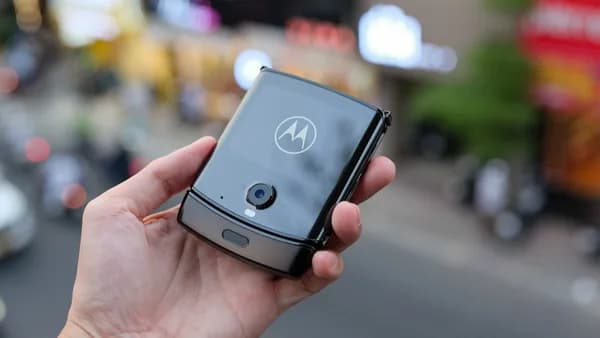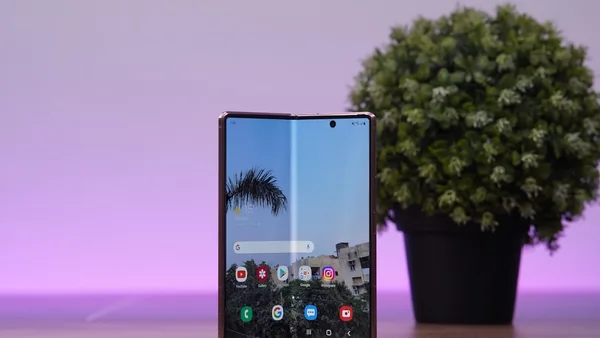

Apple is forecast to enter foldables late and still take 25% of global foldable smartphone shipments in 2026 — a share large enough to redraw a market Samsung spent years building.
That is the tension inside Counterpoint Research’s new forecast, reported by 9to5Mac: foldables remain a category led by Android vendors, yet Apple’s expected iPhone Ultra debut could immediately put Cupertino in second place. Counterpoint sees global foldable smartphone shipments rising 21% year over year in 2026, with Apple’s entry helping “intensify competition in the premium book-type foldable segment.”
Apple may arrive late and still take a quarter of the foldable market
The provocation is not just that Apple may launch a foldable. It is that Apple could capture one in four foldable shipments in its first year in the segment.
Counterpoint’s forecast has Samsung staying in front, while Apple is expected to debut at 25%. The available source material does not provide a fully verifiable vendor-by-vendor 2025-to-2026 share table for Samsung, Huawei, Motorola, HONOR, and others. A separate Smart Analytics Global forecast gives a different 2026 snapshot, with Samsung at 28%, Huawei at 27%, and Apple at 25%.
| Vendor | 2026 forecast share cited by Smart Analytics Global |
|---|---|
| Samsung | 28% |
| Huawei | 27% |
| Apple | 25% |
That simpler comparison still shows the real story. Apple’s arrival is not forecast as a small test launch. It is modeled as a market-share shock.
MLXIO analysis: If Counterpoint is right, Apple is not merely expanding the foldable category. It is likely pulling premium demand toward its own version of the form factor, pressuring established Android foldable vendors at the same time.
The forecast says growth, but the share shift says redistribution
Counterpoint expects 21% year-over-year growth in global foldable smartphone shipments in 2026. That growth matters. But the competitive shift matters more.
A market can expand and still become more brutal for incumbents. Samsung is still expected to remain a leading foldable vendor, but Apple’s projected 25% debut would immediately change the balance at the top of the market. Huawei, Motorola, HONOR Robot Phone, and smaller brands would then be competing in a category where one of the world’s strongest premium phone makers has finally entered.
The before-and-after is stark:
- Before Apple: Samsung and Huawei control much of the foldable market narrative.
- After Apple’s expected entry: Samsung still leads in the forecasts, but Apple immediately becomes a major player.
- Category effect: Shipments grow, but the gains are not necessarily evenly distributed.
- Strategic tension: Android vendors must defend both hardware differentiation and premium positioning.
Forecasts can move. The available source material does not give Apple’s final product specs, exact launch date from Counterpoint, pricing, production volumes, or regional availability. Smart Analytics Global separately says Apple’s first foldable iPhone is expected in late 2026, while Deccan Herald references September. Those timing signals point in the same broad direction, but they are not the same as a confirmed Apple launch plan.
Samsung built the foldable habit; Apple may define the premium version
Samsung’s problem is familiar: it helped normalize a category that Apple may now make more commercially visible to iPhone buyers.
With years of Galaxy Z Fold and Galaxy Z Flip releases behind it, Samsung has already done much of the work required to make folding phones feel less experimental. Apple, by contrast, can enter after the market has been tested, then aim its first foldable at the premium segment where iPhone buyers already expect high prices, tight hardware-software integration, and long-term platform support.
The available source material frames the coming fight around the premium book-type foldable segment. That points to a practical question rather than just a brand question: can a wider folding phone become useful enough to justify its added cost and complexity?
That is where the foldable battle may shift away from novelty — “this phone bends” — toward utility: bigger working space, more flexible layouts, and software that makes the larger canvas feel necessary rather than decorative.
For readers tracking the hardware side of Apple’s rumored foldable push, MLXIO has also covered how display expectations are shaping the narrative in Creaseless Fold Teases Apple’s iPhone Ultra Display. The software side matters too: Apple’s platform cadence, including Beta 5 Puts iOS 26.6 in iPhone Cleanup Mode Before iOS 27, will frame how much of the foldable pitch depends on iOS polish rather than hardware alone.
The iPhone Ultra pricing question remains unanswered — and central
The source material does not provide a price for the expected iPhone Ultra. That omission is not a footnote. It is one of the biggest open variables in the forecast.
Counterpoint’s language points to the premium book-type foldable segment, and Apple’s projected 25% share implies confidence that the company can sell into the high end of the category. But without pricing, it is impossible to judge whether the device is modeled as a broad premium upgrade or a narrower luxury-tier product.
MLXIO analysis: Apple’s challenge is not just making a foldable iPhone. It is making the fold feel necessary. The broader AI-workflow argument gives Apple and Samsung a clearer possible pitch: document work, content editing, scheduling, and moving information across apps could all be more credible on a wider canvas than on a narrow slab phone.
That still leaves execution risk. If the device feels like a larger iPhone with a hinge, the premium case weakens. If it feels like a phone that absorbs some small-tablet workflows, the category’s economics look different.
Apple, Samsung, Huawei, and Motorola face different versions of the same squeeze
Counterpoint’s forecast does not show a market where everyone wins equally. It shows a market where Apple enters, shipments rise, and existing vendors face new pressure.
Samsung is still expected to retain leadership, but faces the most visible comparison. Huawei remains a major player, while Motorola, HONOR, and other brands must defend their positions in a market where Apple’s first-year share is forecast to be unusually large.
Smart Analytics Global offers a similar broad thesis, though with different figures: it forecasts foldable shipments growing more than 30% year over year in both 2026 and 2027, with Samsung at 28%, Huawei at 27%, and Apple at 25% in 2026. It also says China will remain the world’s largest foldable smartphone market, while the U.S. market mix is expected to rise sharply from Q4 2026, mainly driven by Apple’s entry.
Different forecasts, same signal: Apple’s first foldable is expected to matter immediately.
By 2027, the test is whether foldables become useful or just expensive
The next phase of the foldable market will not be decided by shipment-share charts alone. It will be decided by whether wider book-style devices prove they can support daily work better than conventional phones.
Evidence that would strengthen the bullish case:
- Sustained share: Apple holds near its projected 25% after launch demand normalizes.
- Samsung resilience: Samsung keeps leadership while defending its foldable lineup.
- AI utility: Vendors show real workflows that benefit from the larger, flexible layout.
- Regional pull: The U.S. mix rises in Q4 2026 as SAG expects.
Evidence that would weaken it:
- Share slippage: Apple’s debut share proves front-loaded.
- Weak differentiation: Foldables remain premium hardware showcases, not better everyday devices.
- Incumbent erosion: Existing Android foldable makers lose momentum without category growth offsetting the damage.
The practical takeaway is simple: Apple’s projected 25% share would not mean foldables become mass-market overnight. It would mean Apple has found a way to define the high-margin version of the category — and force every Android foldable maker to respond on Apple’s terms.
The Bottom Line
- Apple is forecast to capture 25% of global foldable smartphone shipments in its first year in the category.
- A strong iPhone Ultra debut could pressure Samsung, Huawei, and other Android vendors in premium foldables.
- Counterpoint expects global foldable smartphone shipments to rise 21% year over year in 2026, signaling renewed momentum for the category.