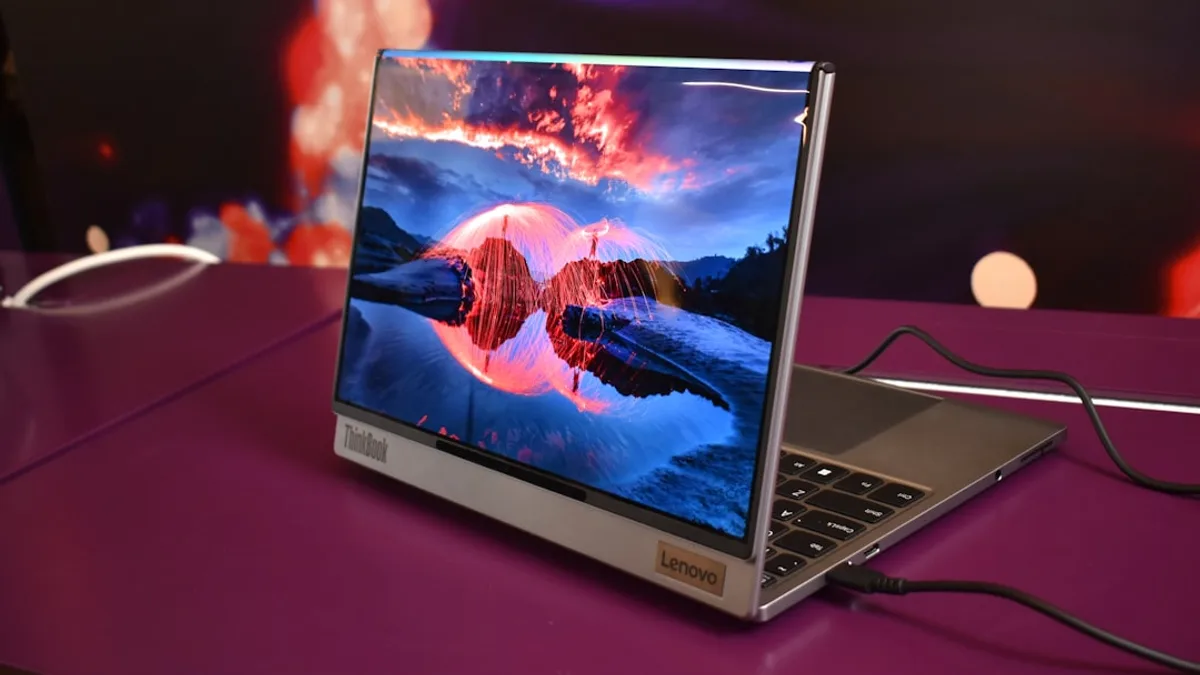
Is Lenovo’s China-only Lecoo Air 14 LNL proving that a budget ultrabook can afford to get slightly heavier if it gains a 2.8K 120 Hz display, Intel Core Ultra 5 228V, and an 80 Wh battery?
That is the real question under the spec sheet. Lenovo’s budget sub-brand Lecoo has revealed the Air 14 LNL as a refresh of the original Air 14, which launched in May as Lenovo’s first Project Firefly effort, according to Notebookcheck. The new model gives up some of the earlier machine’s “under 1 kg” appeal, but the hardware jump is large enough that the battery-focused trade-off may make sense.
Can Lecoo sell a budget ultrabook on performance instead of minimum weight?
The original Lecoo Air 14 was built around portability and price. It used a Core 5 315 chip, a 1920x1200 60 Hz display rated at 300 nits, 12 GB LPDDR5 memory, a 512 GB SSD, and a 50 Wh battery. Its most obvious pitch was the kind of lightness usually used to make budget thin-and-lights feel premium.
The Air 14 LNL changes the emphasis, much like another Lenovo battery comparison. It moves to Intel Lunar Lake with the Core Ultra 5 228V, adds a sharper and faster 14-inch 2.8K 120 Hz panel, raises brightness to 450 nits, and expands battery capacity to 80 Wh.
That is a different bargain. Instead of asking buyers to accept modest internals in exchange for a very light chassis, Lecoo is asking whether they will tolerate 1.18 kg and 14.98 mm if the machine feels better every hour it is used.
MLXIO analysis: this is not just a spec bump. In a budget ultrabook, display quality, battery size, and processor class are often where compromises become visible fastest. Lecoo appears to be moving the Air 14 line away from “cheap and light” toward “still affordable, but less obviously compromised.”
Does Lunar Lake make the Air 14 LNL more than a routine refresh?
As with the ThinkPad E16 Wildcat Lake, the processor swap is the center of the story. The earlier Air 14 used an entry-level Core 5 315. The new Air 14 LNL uses the 2024 Intel Core Ultra 5 228V, which Notebookcheck describes as offering good NPU and iGPU performance.
That matters because Lunar Lake is not only a CPU upgrade. In this class of laptop, a stronger integrated GPU can change how the system handles media work, light creative tasks, external displays, and casual graphics workloads, even if it is a different approach from the Lecoo Pro 14’s eGPU power or RTX 5060 ZBook models. A stronger NPU matters if buyers expect more local AI features over the useful life of the machine.
Lecoo says the 80 Wh battery is enough for 21 hours of office use.
That claim still needs independent testing. Battery figures based on office use can vary sharply with brightness, workload, wireless use, and background tasks. But the combination of a larger battery and efficient Lunar Lake silicon gives the claim more credibility than it would have had on a hotter or older platform.
This is also where Lenovo’s broader segmentation becomes interesting, but only as analysis. Lecoo is the budget-oriented sub-brand in the supplied source. Lenovo also sells better-known laptop families outside this Lecoo context. If Lecoo can put newer silicon and stronger displays into cheaper machines without wrecking build quality or thermals, Lenovo gets another way to attack cost-sensitive buyers without making every mainstream model chase the lowest price.
For adjacent Lenovo context, MLXIO has covered similar tradeoffs in ThinkBook 14x OLED and dual-SSD hardware positioning and the pricing tension in ThinkBook-versus-ThinkPad buying decisions. Those are separate product stories, but they underline the same recurring laptop question: which compromises are buyers actually willing to accept?
How much did Lecoo really change between the Air 14 and Air 14 LNL?
The upgrade is easiest to see side by side.
| Spec | Original Lecoo Air 14 | Lecoo Air 14 LNL |
|---|---|---|
| Processor | Core 5 315 | Intel Core Ultra 5 228V |
| Display | 14-inch 1920x1200, 60 Hz | 14-inch 2.8K, 120 Hz |
| Brightness | 300 nits | 450 nits |
| Color coverage | 100% sRGB | Not specified in supplied source |
| Memory | 12 GB LPDDR5 | Not specified in supplied source |
| Storage | 512 GB SSD | Not specified in supplied source |
| Battery | 50 Wh | 80 Wh |
| Weight | Lighter, closer to Lecoo’s “under 1 kg” pitch | 1.18 kg |
| Thickness | Thinner than LNL, exact figure not supplied | 14.98 mm |
| Charger | Not specified in supplied source | 65 W GaN charger |
| Keyboard | Not specified in supplied source | Backlit, 1.5 mm key travel |
| Login | Not specified in supplied source | Facial recognition |
| Starting price | About $440 equivalent | Not confirmed; expected to be higher |
The battery increase is the cleanest number: 50 Wh to 80 Wh, a 60% jump. That alone can justify some added weight if the chassis remains portable. At 1.18 kg, the LNL is no longer chasing the original model’s most extreme weight claim, but it is still firmly in thin-and-light territory.
The display upgrade is just as important. Moving from 1920x1200 at 60 Hz to 2.8K at 120 Hz changes the perceived quality of the machine every time the user scrolls, reads, or switches windows. The higher 450-nit brightness also gives the LNL more room for bright indoor use than the earlier 300-nit panel.
The missing specs are not minor. Lecoo has not confirmed the LNL’s memory, storage configurations, final price, or release date in the supplied material. Those details will decide whether the new machine is a value play or just a better laptop at a much higher price.
Is Project Firefly becoming a real low-cost ultrabook experiment?
Notebookcheck frames the original Air 14 as Lenovo’s first move tied to Intel’s Project Firefly. The supplied material does not define Project Firefly in technical detail, so the safe read is narrow: this was a lightweight, affordable ultrabook push under Lecoo, not a conventional IdeaPad or Yoga launch.
The LNL refresh suggests Lenovo is refining that idea quickly. The original Air 14 leaned hard on portability and aggressive pricing. The new version keeps the same 14-inch class but shifts the center of gravity to silicon, screen, and endurance.
That is a more demanding design problem. A better processor and larger battery can expose weak cooling. A sharper 120 Hz panel can drain power faster if not managed well. A budget chassis can feel less convincing if the hinge, keyboard, fan curve, or display tuning lag behind the headline specs.
MLXIO analysis: this is where the Air 14 LNL becomes useful as a signal. If Lenovo can keep the LNL priced near the aggressive spirit of the original Air 14 while improving the parts users notice daily, Lecoo becomes more than a low-cost badge. If the price rises too far, the product risks losing the simplicity of the original pitch.
Who has the most at stake if the Air 14 LNL works?
For buyers, the appeal is straightforward: newer Intel silicon, a stronger display, a much bigger battery, a backlit keyboard, facial recognition, and a 65 W GaN charger in a machine that remains light enough for daily carry.
The best-fit user is not a gamer or workstation buyer. It is the student, traveler, remote worker, or mainstream productivity user who cares more about battery life, display sharpness, and responsiveness than discrete graphics or maximum expandability.
For Lenovo, the Air 14 LNL could show whether Lecoo can carry more capable hardware without abandoning budget positioning. That matters because the original model started around a $440 equivalent price, while Notebookcheck says the LNL will “certainly” cost more. The size of that increase is the whole story.
For Intel, the relevance is also clear from the supplied specs. Lunar Lake’s NPU and integrated graphics are not being reserved only for premium designs here. If the Air 14 LNL ships at an aggressive price, it would put Intel’s newer efficiency and AI-capable silicon into a more accessible class of laptop.
Which unanswered details will decide whether the Air 14 LNL is a bargain or a spec-sheet trap?
The Air 14 LNL looks much stronger than its predecessor on paper, but budget laptops are won or lost in execution.
The decisive checks are practical:
- Price: Lecoo has not confirmed it. The original started at about $440 equivalent, and the LNL is expected to be more expensive.
- Memory and storage: The supplied source does not list LNL configurations. Low RAM or limited SSD options could weaken the value case.
- Thermals: Lunar Lake efficiency helps, but chassis tuning still decides sustained performance and fan noise.
- Display quality: Resolution, refresh rate, and brightness are confirmed. Color coverage for the LNL is not.
- Battery reality: The 21-hour office use claim needs independent testing.
- Availability: Lecoo is described as China-only, so global buyers should not assume access.
The forward-looking read is simple: if the Air 14 LNL lands close enough to the original Air 14’s value positioning, it could reset expectations for what a budget ultrabook should include. If pricing climbs too high, or if memory, thermals, or panel quality disappoint, the upgrade becomes less a value breakthrough than a reminder that one strong processor cannot carry an entire laptop.
Key Takeaways
- Lenovo’s Lecoo Air 14 LNL shifts the budget ultrabook pitch from minimum weight to better everyday hardware.
- The move to Lunar Lake, a 2.8K 120 Hz display, and an 80 Wh battery addresses common compromises in cheaper thin-and-light laptops.
- The tradeoff is portability, with the new model rising to 1.18 kg instead of staying under 1 kg.