Can a $299 flip phone make restraint feel like an upgrade instead of a downgrade?
That is the real question behind Light Flip, the first flip phone from the maker of Light Phone 3. The device is now available for pre-order at $299, with first deliveries expected in April 2027, according to Notebookcheck. On paper, it sounds contradictory: a minimalist phone with 5G, USB-C, an OLED display, and a 50-megapixel camera.
That contradiction is the product. Light is not trying to build a cheaper Android phone. It is trying to make a phone that feels modern enough to carry, but limited enough to change behavior.
Can a colorful plastic flip phone turn smartphone fatigue into a real product category?
The Light Flip is not framed as a nostalgia prop. It is a response to people who want the closure of a flip phone without being pushed all the way back into obsolete hardware.
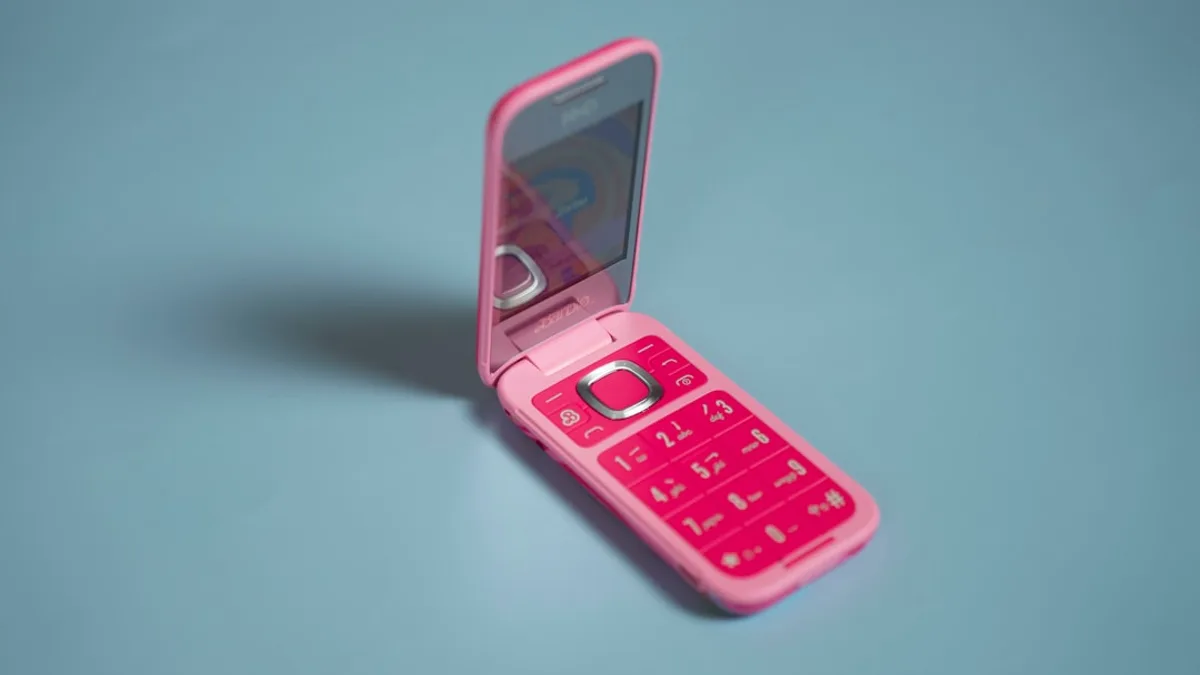
Closed, Notebookcheck describes it as looking like a colorful plastic brick. Open, it reveals a 2.8-inch OLED display with 640 x 480 resolution and an old-style keypad with three programmable function keys. It comes in light gray, yellow, pink, red, blue, and black.
That color range matters. Minimalist phones often risk looking punitive: gray rectangles for people trying to discipline themselves. Light is taking a warmer route. The point is not just less screen time. It is making “less phone” feel desirable.
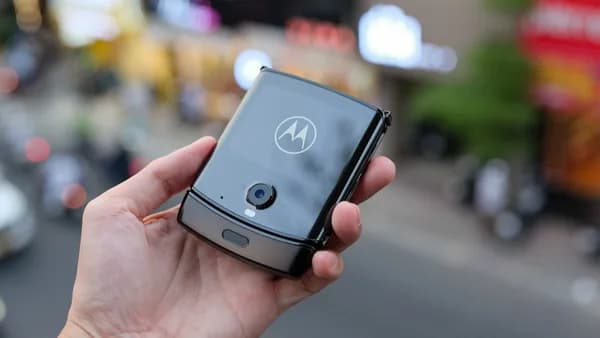
TechCrunch adds useful context: co-founder Kaiwei Tang, who helped create the Motorola Razr more than 20 years ago, said Light had been speaking with young flip-phone users for years.
“They’re describing the flip phones in negative language, but they stick with it, and they feel proud,” Tang told TechCrunch.
MLXIO analysis: that pride is the opening Light is chasing. The Light Flip is selling identity as much as hardware.
Does the spec sheet make minimalism feel current rather than compromised?
The Light Flip runs LightOS, which means it does not support modern smartphone apps. Instead, it offers core tools: GPS navigation, podcasts, music, calendar, alarm, and phone functions. Light can add more apps over time through a developer kit.
The hardware is deliberately mixed:
| Feature | Light Flip detail |
|---|---|
| Price | $299 pre-order |
| Display | 2.8-inch OLED, 640 x 480 |
| Connectivity | 5G modem, 4G LTE per TechCrunch |
| Charging | USB-C |
| Camera | 50 MP camera, saves 12-MP photos per Notebookcheck |
| Audio | 3.5-mm headphone jack, Bluetooth support per TechCrunch |
| Battery | 1,800-mAh, user-replaceable |
| SIM | nano-SIM and eSIM |
| Chip | MediaTek MT8873 with four ARM Cortex-A78 cores and four Cortex-A55 cores |
| Memory/storage | 6 GB RAM, 128 GB flash storage |
The most important specs are not the processor or storage. They are 5G, USB-C, and OLED. Those keep the device from feeling like a forced retreat. Light is stripping out the app model, not the basic expectations of a modern phone.
For readers tracking OLED hardware decisions more broadly, MLXIO has covered related display questions in Red Screen Scare: Galaxy S26 Ultra Dodges OLED Damage and Key Display Bet Gets Cut From Cheaper Apple Vision Pro. The Light Flip sits at the opposite end of the device spectrum, but the same point applies: display choices still shape whether hardware feels premium or compromised.
Is $299 cheap for a Light phone, or expensive for a phone that does less?
The cleanest comparison is inside Light’s own lineup. TechCrunch reports that the Light Phone III retails unlocked at $799. The Light Flip drops to $299 by giving up a touch screen, NFC reader, and selfie camera. It also uses plastic rather than aluminum.
That trade is central to the pitch. Light is making its most affordable device by removing the parts that pull users back toward smartphone behavior.
TechCrunch also reports that Light is testing a service-plan route: customers can get the Light Flip on a two-year contract at $39 per month, while the Light Phone III will be available for $59 per month over the same term.
MLXIO analysis: $299 is not just a price cut. It is a test of whether minimalist phones can move beyond affluent digital-detox buyers. A $799 “less phone” asks for conviction. A $299 version asks for curiosity.
Can Light update the old flip-phone promise without making it feel obsolete?
Classic flip phones had one powerful behavior built into the hardware: closing the phone ended the interaction. The Light Flip brings that gesture back, but avoids copying the past too closely.
There is no outer screen, per TechCrunch. Instead, there is a small front light for notifications. That is a sharp design choice. An outer display can become another invitation to check. A light says something happened, but it does not feed the loop.
The phone also supports music uploads, online podcast downloads, wired headphones through a 3.5-mm jack, Bluetooth headphones, eSIM, physical Nano SIM, and USB-C charging. These details keep it from becoming a museum object.
The tension is messaging and services. TechCrunch notes that giving up instant internet access, Apple Pay, streaming music, WhatsApp, and iMessage is hard. Light knows the switch is not frictionless. That is why it plans a “Flip Your Life” program with bi-weekly newsletters for pre-order customers before the April 2027 ship date.
Who benefits from a phone whose main feature is saying no?
Different buyers will read the Light Flip in different ways.
- Digital minimalists: The appeal is obvious. They get calls, basic tools, music, podcasts, navigation, and modern connectivity without a full app store.
- Parents and students: MLXIO analysis: this could become a compromise device if families want something more capable than a basic feature phone but less absorbing than a smartphone.
- Carriers and retailers: The pitch is harder. This is a phone built around fewer apps and potentially less engagement, not more services.
- Developers: The SDK creates a narrow opening. Light can add functions, but every added tool risks weakening the product’s restraint.
That last point is the knife edge. A minimalist phone becomes more useful as it adds features. It also becomes less distinct.
Could restraint become a budget-phone feature instead of a niche philosophy?
The Light Flip creates a middle lane: not a bare-bones dumbphone, not a full smartphone, not a premium foldable. It borrows the flip silhouette but avoids the foldable-screen arms race entirely.
Its strongest practical use cases are easy to see: secondary phone, travel phone, child’s first device, or primary phone for someone serious about cutting app exposure. The device’s 19-millimeter thickness and 160-gram weight also underline that Light is not chasing ultra-thin status. It is choosing simplicity over spectacle.
MLXIO analysis: if the Light Flip works, the lesson for budget phone makers will not be “make everything less capable.” It will be “constraints can be a feature when they are designed with intent.”
What evidence will show whether the Light Flip is a daily driver or a short-lived statement?
The first test will not arrive until April 2027, when initial orders are expected to ship. Until then, the key signal is whether pre-order buyers stay committed through the long wait.
After launch, the evidence will be more concrete:
- Retention: Do users keep carrying it after the novelty fades?
- SDK discipline: Does Light add useful tools without recreating the app overload it rejects?
- Messaging friction: Can buyers tolerate life without the communication apps they rely on today?
- Camera expectations: Does the 50 MP sensor saving 12-MP photos feel adequate in daily use?
- Service model: Does the $39 per month contract make the device easier to adopt?
The Light Flip’s promise is not that everyone wants less phone. It is that enough people may want a phone that stops asking for more of them. If Light can balance modern basics with strict limits, the $299 flip phone could become more than a digital-detox accessory. If not, it will remain a colorful protest against the smartphone — sincere, stylish, and hard to live with.
Key Takeaways
- Light Flip aims to make minimalist phones feel modern rather than outdated.
- At $299, it targets buyers who want fewer distractions without giving up basics like 5G, USB-C, OLED, and a 50-megapixel camera.
- Its April 2027 delivery window shows the minimalist phone category is still emerging, not yet mainstream.