Sony’s January 2028 PlayStation disc cutoff could leave Nintendo as the only major console maker still giving physical games real shelf space. The people most exposed are not just collectors. Retailers, publishers, families buying boxed games, and players who still value cartridges as transferable objects all face a market where physical media may stop being the default and become a Nintendo-shaped exception.
That is the signal in Circana analyst Mat Piscatella’s comments after Sony said it will stop producing physical discs for new PlayStation games in January 2028, according to Notebookcheck. Piscatella told VGC that Nintendo is unlikely to change course just because Sony — and potentially Microsoft — moves harder toward digital-only hardware.
“Sales of new physical video games have fallen every year since the late 2000s.”
That line matters more than the nostalgia debate. Sony’s move may feel sudden to players, but Piscatella frames it as the formal recognition of a market shift that already happened.
PlayStation’s disc exit pressures retailers before it pressures Nintendo
Sony’s decision sets a date: starting in January 2028, Sony will stop producing physical discs for new PlayStation games, according to the source material. Piscatella said the move was expected eventually, even if the timing surprised him.
“It was inevitably going to happen someday. I didn’t think an announcement would happen today, but hey, it’s 2026, and things just happen all the time, don’t they?”
For retailers, the immediate issue is not whether shelves vanish overnight. Piscatella specifically says they will not. The issue is what those shelves hold.
He expects more codes in boxes, more merchandise, and more special editions with physical packaging and “swag” attached. That preserves the retail ritual while weakening the software economics underneath it. A box can remain on a shelf even when the game inside is no longer a disc or cartridge.
Who absorbs the lost software traffic if boxed PlayStation releases disappear? Piscatella’s answer points toward Nintendo.
He said retail has “already leaned into Nintendo support more and more over the past few years,” and that this could keep increasing. That does not mean physical game spending rebounds. He explicitly expects the “continued decline in physical game retail spend.”
Nintendo’s advantage is control, not nostalgia alone
Piscatella’s core Nintendo argument is blunt: Nintendo does not usually let Sony or Microsoft dictate its hardware strategy.
“My gut says Nintendo does what Nintendo wants to do, and I don’t see them changing anything in their plans based on what Sony or Microsoft do or say. Really, Nintendo is going to be Nintendo, for better or worse.”
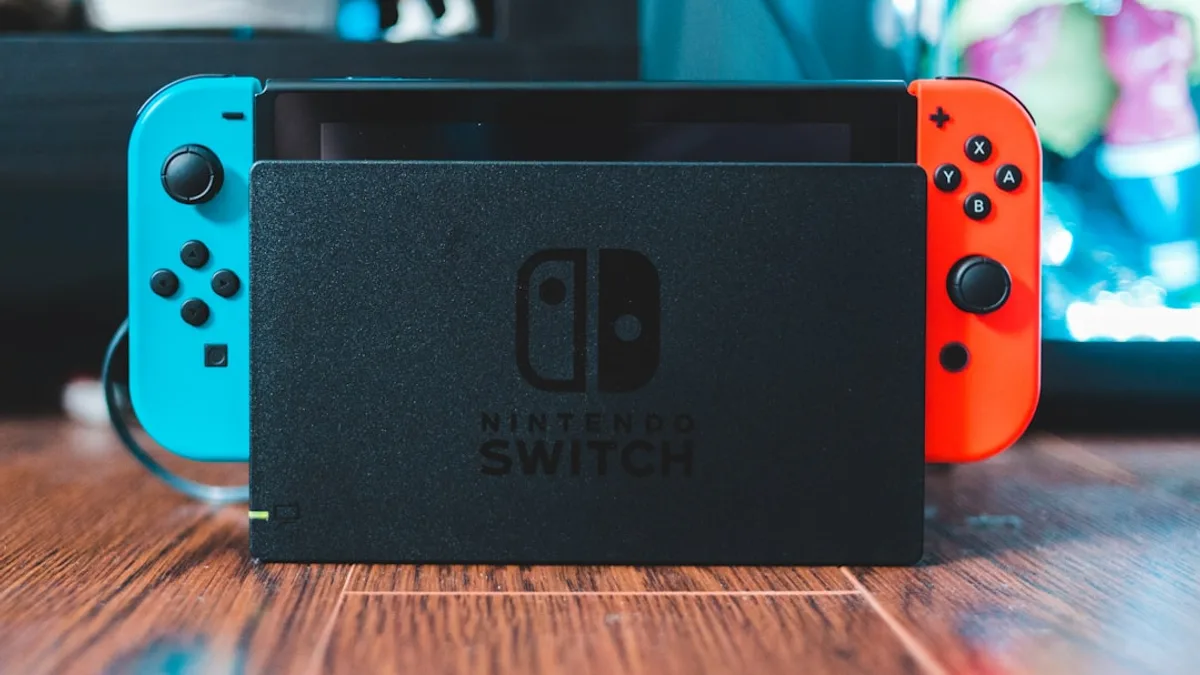
That makes Nintendo Switch 2 central to the next phase of physical games. VGC’s version of the interview adds that the U.S. physical market has seen “the slightest growth” recently because of Switch 2, but Piscatella does not expect that growth to last. The point is narrower: Nintendo may remain the last major platform holder producing physical media through at least the end of the Switch 2 lifecycle.
MLXIO analysis: this is not just about cartridges versus discs. Nintendo’s physical presence works because its hardware, retail packaging, and first-party identity still fit together. A cartridge for a portable hybrid console carries a different consumer signal than a disc for a living-room console that is increasingly treated as an account-based access point.
There are limits. Piscatella’s own comments allow for a more diluted version of physical retail: codes in boxes, special editions, merchandise bundles. Physical presence can survive while physical ownership weakens.
If Nintendo keeps cartridges but third-party publishers lean harder into codes, is that still a physical market or just physical packaging? That may become the defining question for Switch 2 shelves.
Publishers gain flexibility as physical software loses leverage
Piscatella says Sony’s move will mean “lower sales of video game software at retail.” That is the cleanest economic takeaway in the source material.
A digital-only PlayStation pipeline gives publishers fewer reasons to plan around boxed inventory. It also changes the role of retail from software distribution to marketing, gifting, accessories, collectibles, and premium editions. The source does not provide margin data, resale figures, or publisher revenue splits, so those should not be treated as established facts here.
Still, the direction is clear enough. If fewer console makers produce physical media, boxed software has less bargaining power across the chain.
| Stakeholder | Source-supported shift | MLXIO analysis |
|---|---|---|
| Sony | Stops new PlayStation disc production in January 2028 | Formalizes a digital-first future for PlayStation software |
| Nintendo | Likely to keep physical media through Switch 2 lifecycle, per Piscatella | Becomes the physical holdout by default |
| Retailers | More codes in boxes, merch, special editions | Shelves remain, but software spend keeps shrinking |
| Players | Many will be “justifiably” unhappy, per Piscatella | Ownership, lending, collecting, and resale concerns become more concentrated around Nintendo |
Piscatella also said it is “safe to assume that both PlayStation 6 and Project Helix will be digital-only devices.” That is his analysis, not an official announcement from Sony or Microsoft in the supplied material.
For readers tracking adjacent Sony moves, MLXIO has also covered Sony Patent Turns DualSense Into a PSN Security Gate and PlayStation PC Bet Was Never About Steam Money After All. This story’s claim, though, rests on Piscatella’s physical-media analysis, not those separate reports.
Players face a psychological break more than a sudden market break
Piscatella’s sharpest quote is also the most useful for separating emotion from economics.
“All of this will result in more of a psychological shift than a true market shift. The market shift has already happened.”
That does not dismiss player anger. He says “a lot of players will be (justifiably) very unhappy with these decisions.” But his point is that the sales trend has been running against new physical games for years.
MLXIO analysis: the psychological break matters because physical games carry rights and habits that digital libraries do not feel the same to many players: gifting, lending, collecting, resale, and offline confidence. The supplied sources do not quantify those behaviors, so the safer read is qualitative. Sony’s decision makes those concerns harder to ignore.
What changes when physical ownership becomes a platform-specific perk instead of an industry-wide option? Buyers who care about boxes may start treating Nintendo hardware differently, not because Nintendo has promised permanent support, but because its current path looks less hostile to physical media than its rivals’ paths.
Notebookcheck’s source material also mentions Xbox attention after Sony’s announcement, including questions around Project Helix. But Xbox and Nintendo have not made official statements in the provided source. That uncertainty matters.
Nintendo may inherit physical games as a premium niche, not a mass standard
If Piscatella is right, Nintendo does not need to launch a campaign for physical games. It can simply keep doing what it already planned while Sony exits discs and Microsoft’s next hardware is expected, in his view, to go digital-only.
That would leave Nintendo with a strange advantage: not leadership in a growing format, but ownership of a shrinking one.
The watch item is how “physical” Nintendo remains. Evidence supporting Piscatella’s thesis would include continued cartridge releases for major Switch 2 titles, stronger retail focus around Nintendo software, and boxed editions that still contain actual game media rather than only download codes. Evidence weakening it would be a visible shift toward code-in-box releases, narrower cartridge availability, or any Nintendo statement aligning more closely with Sony’s disc exit.
Physical games are not dead in this scenario. They are becoming selective. And if Nintendo becomes the last major console maker standing behind them, cartridges may stop being the old normal and start becoming a premium signal of trust, collectability, and platform difference.
The Bottom Line
- Sony’s 2028 disc cutoff formalizes the long-running decline of physical game sales.
- Retailers may keep game shelves, but the products on them could shift from discs to codes and collectibles.
- Nintendo could become the main remaining option for players and families who value transferable physical games.