MLXIO
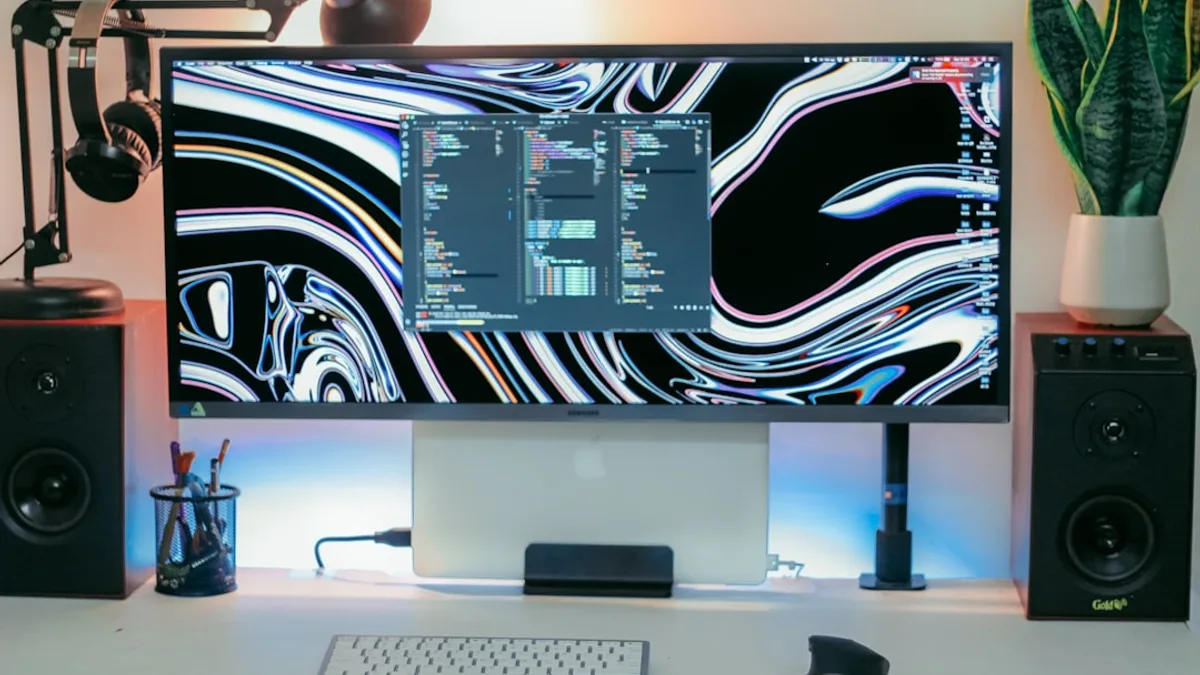
a computer monitor sitting on top of a desk
TechnologyMay 22, 2026· 4 min read· By MLXIO Insights Team

Samsung Display Hits 90% Yield, Unlocking OLED MacBook Pro

Share

MLXIO Intelligence

Analysis Snapshot

69
High
Confidence: LowTrend: 10Freshness: 90Source Trust: 100Factual Grounding: 95Signal Cluster: 40

High MLXIO Impact based on trend velocity, freshness, source trust, and factual grounding.

Thesis

High Confidence

Samsung Display's achievement of 90%+ manufacturing yields on tandem OLED panels enables Apple to move forward with OLED MacBook Pro models, projected for release in late 2026 to early 2027.

Evidence

  • Samsung Display has reached over 90% manufacturing yields on 14-inch and 16-inch tandem OLED panels.
  • Mass production is ramping up for these panels, which will feature touchscreen support—a first for MacBook Pro.
  • Apple's OLED MacBook Pro models are now projected to launch between late 2026 and early 2027.
  • The 90%+ yield rate addresses previous bottlenecks and signals reliable, large-scale production is viable.

Uncertainty

  • Apple has not confirmed pricing or how the switch to OLED and touchscreens will affect costs.
  • Potential software and workflow changes resulting from touchscreen integration remain unspecified.
  • Market response and competitor adaptation to Apple's OLED MacBook Pro are unknown.

What To Watch

  • Official announcements from Apple regarding pricing and feature set.
  • Supply chain developments or potential production setbacks.
  • Competitor responses in the premium laptop segment, especially regarding OLED adoption.

Verified Claims

Samsung Display has achieved over 90% manufacturing yields for 14-inch and 16-inch tandem OLED panels.
📎 The article states Samsung Display is now hitting over 90% manufacturing yields on its next-generation OLED panels.High
Apple is projected to launch OLED MacBook Pro models between late 2026 and early 2027.
📎 The article projects the debut of OLED MacBook Pro models between late 2026 and early 2027.High
The upcoming OLED MacBook Pro panels will feature touchscreen support, a first for MacBook Pro.
📎 Touchscreen capability is baked into these upcoming panels—a first for MacBook Pro.High
Samsung Display’s yield breakthrough enables reliable, large-scale production of OLED panels for Apple’s MacBook Pro.
📎 The 90%+ yield rate signals reliable, large-scale production is finally viable after years of delays and complexity.High
Apple’s adoption of tandem OLED panels is expected to improve color fidelity, contrast, and energy efficiency in MacBook Pros.
📎 Tandem OLED panels promise a leap in color fidelity, deeper blacks, and improved contrast...higher energy efficiency.High

Frequently Asked

When will the OLED MacBook Pro models be released?

The OLED MacBook Pro models are projected to launch between late 2026 and early 2027.

What display technology will the new MacBook Pros use?

The new MacBook Pros will use tandem OLED panels manufactured by Samsung Display.

Will the upcoming OLED MacBook Pros have touchscreen support?

Yes, touchscreen support will be integrated into the new OLED MacBook Pro panels.

How does Samsung Display’s yield breakthrough impact Apple’s MacBook Pro plans?

Achieving over 90% manufacturing yields enables Apple to reliably scale up production and move forward with OLED MacBook Pro models.

What are the expected benefits of OLED panels in MacBook Pros?

OLED panels are expected to deliver improved color fidelity, deeper blacks, better contrast, and higher energy efficiency compared to LCD panels.

Updated on May 23, 2026

Samsung Display Hits 90% Yield, Accelerating OLED MacBook Pro Production

Apple’s shift to OLED MacBook Pros has cleared a crucial hurdle: Samsung Display is now hitting over 90% manufacturing yields on its next-generation 14-inch and 16-inch tandem OLED panels. This technical milestone, confirmed as mass production ramps up, lets Apple move faster toward ditching LCD for its flagship laptops. The new OLED MacBook Pro models are now projected to debut between late 2026 and early 2027, according to Notebookcheck.

Touchscreen capability is baked into these upcoming panels—a first for MacBook Pro. For Apple, the 90%+ yield rate isn’t just a manufacturing brag; it’s the threshold that signals reliable, large-scale production is finally viable after years of delays and complexity. Samsung Display’s success ends a bottleneck that previously threatened Apple’s entire high-end MacBook roadmap.

This shift isn’t just about better screens. It signals Apple’s confidence in the maturity of OLED for professional laptops, after years of reserving the tech for its iPhones and most recently, the iPad Pro. Apple’s decision to wait until yields hit 90%+—not just “good enough”—shows how much is riding on display quality and reliability for its pro line.

How OLED and Touchscreen Tech Will Transform MacBook Pro User Experience

Tandem OLED panels promise a leap in color fidelity, deeper blacks, and improved contrast—traits that have kept creative professionals loyal to the MacBook Pro brand. The transition from LCD means sharper visuals and higher energy efficiency, especially on larger screens where backlight bleed and color shifting plague traditional panels.

Touchscreen support is the headline hardware twist. While Apple has resisted touch on MacBook for years, integrating it into the OLED upgrade signals a shift in how it sees pro-level interaction. That could open the door for software changes and new workflows, especially for designers, developers, and users who’ve wanted iPad-like direct manipulation on their laptops.

Samsung Display’s yield breakthrough addresses long-standing concerns about scaling up complex OLED manufacturing for large, high-use devices. Previous attempts to ramp up similar panels hit snags due to defects and low yields, causing repeated delays. With 90%+ yields now achieved, Apple can finally commit to its OLED MacBook timeline with fewer risks of supply chain bottlenecks or quality issues.

This move lines up with Apple’s broader strategy: push advanced display tech across its lineup, from the iPhone and iPad Pro’s OLED to the MacBook Pro. Unlike microLED, which remains years away due to manufacturing headaches, OLED is here—and proven—at least for the next few product cycles.

What to Expect Next: Apple’s Roadmap for OLED MacBook Pro and Market Impact

Apple is targeting a launch window for the OLED MacBook Pro between late 2026 and early 2027. The company hasn’t confirmed pricing, and the source material doesn’t detail how much the switch to tandem OLED and touchscreens will add to the bill of materials or final retail cost. That uncertainty leaves open questions about how Apple will position these models within its lineup.

What’s clear: Apple’s adoption of OLED sets a new bar for premium laptops. Tandem OLED panels with touch support, manufactured at high yields, give Apple a display advantage that rivals may struggle to match at similar scale or quality. The focus on large, high-longevity panels signals Apple wants MacBook Pro to remain the hardware of choice for professionals who demand the best screen tech, not just a spec bump.

Future innovations remain speculative, but the groundwork is laid for Apple to push battery life improvements (thanks to OLED efficiency), new UI paradigms leveraging touch, and possibly tighter integration with iPad and iPhone workflows. Samsung Display’s yield improvements may spill over into other Apple products—watch for similar upgrades in the MacBook Air or even larger iPads if production capacity allows.

What Remains Unclear and What to Watch

The timeline is still fluid. While mass production is ramping up, there are no guarantees Apple will hit the late 2026 launch if supply chain hiccups return or if it demands further refinements. Details about final specs, pricing, and how Apple will differentiate OLED models from existing LCD MacBook Pros are also missing.

The biggest variable: how Apple’s software will adapt to touch on MacBook Pro, and whether the company will use this transition to push new user experiences or simply offer touch as an optional extra. Until Apple confirms these details, the impact on everyday workflows and developer support remains speculation.

The next milestones: Samsung Display’s ability to sustain high yields as volume increases, Apple’s official announcements on specs and pricing, and any signs of OLED tech trickling down to less expensive MacBooks. For now, Samsung’s manufacturing win is the story—but how Apple capitalizes on it will define the next chapter for MacBook Pro.

Why It Matters

  • Samsung Display’s 90%+ yield unlocks mass production of OLED MacBook Pros, ending years of bottlenecks.
  • OLED and integrated touchscreen will bring major improvements in display quality and user interaction for professionals.
  • Apple’s move signals growing confidence in OLED tech for high-end laptops, impacting both the market and user expectations.


MacBook Pro Display Technologies: LCD vs OLED

FeatureLCD (Current)OLED (Upcoming)
Panel TypeLCDTandem OLED
TouchscreenNoYes
Color FidelityGoodExcellent
Black LevelsLimitedDeeper
Energy EfficiencyModerateHigher
Production Yield (Samsung Display)Below 90%Above 90%

Samsung Display OLED Panel Yield Rate for MacBook Pro

Previous Yields
%80
Current Yield
%90
MLXIO

Written by

MLXIO Insights Team

Algorithmic Research & Human Oversight

Powered by advanced algorithmic research and perfected by human oversight. The Insights Team delivers highly structured, cross-verified analysis on emerging tech trends and digital shifts, filtering out the fluff to give you high-fidelity value.

Related Articles

white apple charging adapter on white table
TechnologyJul 30, 2026

Rare MacBook Air Deals Steal $500 MacBook Pro Spotlight

Rare M5 MacBook Air markdowns and $500 MacBook Pro cuts make this Apple deal wave about smarter portable upgrades.

6 min read

white round plastic lid on black surface
TechnologyAug 2, 2026

$240 Off M5 MacBook Air Reveals Apple’s Best Deal Yet

Apple’s refurb store has the top M5 MacBook Air deal, with wider cuts on AirPods, AirTags, MacBook Pro models and Sharge gear.

8 min read

turn-on laptop displaying 97 percent battery
TechnologyJul 30, 2026

27-Hour Battery Claim Makes Lenovo IdeaPad Slim 3 Tempting

Lenovo’s 16-inch IdeaPad Slim 3 promises up to 27 hours, but the claim hinges on light video playback and region-specific configs.

5 min read

a desk with a computer monitor and keyboard on it
TechnologyJul 25, 2026

$1,199 Meirro Pro 6K Exposes Apple's Studio Display Gap

Meirro Pro 6K gives Mac users a 32-inch 6K option for $1,199, hitting the display gap Apple left wide open.

8 min read

Close-up of a computer motherboard with many components.
TechnologyJul 31, 2026

Apple's $1,399 iPhone 18 Pro Bets on Sticker Shock

$1,399 would turn iPhone 18 Pro pricing into Apple's margin test as chip and memory costs surge.

7 min read

apple logo on blue surface
FinanceAug 2, 2026

Apple Stock Dumps $430B as Q3 Warning Spooks Bulls

Apple’s strong Q3 was not enough: supply warnings and slower services growth erased $430B and handed Nvidia the market cap lead.

6 min read

people in a city with high rise buildings and trees during daytime
FinanceAug 2, 2026

$340 Apple Stock Cut Reveals JP Morgan's Memory Crunch

JP Morgan trimmed Apple’s target to $340 as memory shortages threaten Q4 supply despite strong iPhone 17 and Siri AI demand.

11 min read

red and white pepsi logo
CybersecurityJul 29, 2026

Claude Cracks Safari Flaw as iOS 26.6 Fixes 87 Bugs

Apple’s iOS 26.6 fixes 87 flaws, including a Safari/WebKit bug Anthropic researchers found with Claude.

6 min read

two black fish finders on a fishing boat
TechnologyAug 5, 2026

Apple CarPlay Grabs the Helm on 2027 Pontoon Boats

Apple CarPlay and Android Auto are coming standard to select 2027 Crest and Balise pontoons with Savvy Navvy navigation.

7 min read

a person holding a smart phone in their hand
TechnologyAug 4, 2026

18-Hour Motorola Razr Fold Leaves Samsung Chasing Hard

Motorola’s Razr Fold hit 18h22m browsing, beating Samsung’s Galaxy Z Fold7 by about four hours.

7 min read

Stay ahead of the curve

Get a weekly digest of the most important tech, AI, and finance news — curated by AI, reviewed by humans.

No spam. Unsubscribe anytime.