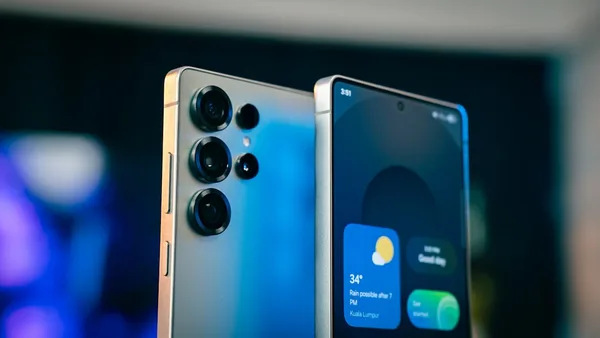
Four 2027 Galaxy S27 models could ship with the same privacy-screen technology now associated with the Galaxy S26 Ultra, turning a single Ultra feature into a line-wide display bet if the Korean industry report proves accurate.
The claim, reported by Notebookcheck, is specific on the feature direction: all four Samsung Galaxy S27 models are expected to gain Privacy Display support. The report does not establish Flex Magic Pixel AMOLED branding across the lineup, so the safest read is broader support for a software-controlled privacy mode rather than confirmed panel identity. That still matters because this is not just another brightness toggle. It points to Samsung treating display-level privacy as a flagship feature category.
Four Galaxy S27 models would move Privacy Display beyond the Ultra tier
The reported plan would mark a clear expansion from the Galaxy S26 Ultra, where Privacy Display is described as an exclusive headline feature. Notebookcheck says the feature has drawn criticism over reduced display quality, but also appears to be popular worldwide.
That tension is the story. A privacy screen that makes the panel worse in normal viewing would be a hard sell. A privacy screen that users can switch on only when needed — on a train, in an airport lounge, during mobile banking, or while reading work messages — becomes easier to justify.
The key reported idea is a software-controlled Privacy Display mode that limits what people can see from the side. Someone looking straight at the screen can still see the content. From the side, the display appears harder to read when the mode is active, depending on how Samsung implements it.
MLXIO analysis: If Samsung brings this to every Galaxy S27 flagship, it weakens the old Ultra-only logic. The Ultra would still need other differentiators, a question also raised by the Galaxy S27 Pro camera leak. Privacy Display would become part of the base flagship promise, not a reason by itself to buy the most expensive model.
For more context on how this feature has already been tied to Samsung’s 2027 lineup, see our earlier coverage of the Galaxy S27 Pro stealing the Ultra’s Privacy Display trick.
Flex Magic Pixel AMOLED is not just a dimmer screen
A normal software dimming feature lowers brightness for everyone. A physical privacy screen protector narrows the viewing cone but often changes clarity and brightness all the time. Samsung’s reported direction appears to sit between those poles: the feature is described as software-controlled, while the exact panel branding and final hardware stack for the full Galaxy S27 range remain unconfirmed in the supplied material.
That distinction matters for daily use. Privacy Display only works as a mainstream feature if users do not have to sacrifice normal screen quality all day. The report says the feature is software-activated and controlled, which implies Samsung can make it situational rather than permanent.
The likely trade-offs are straightforward, even if the report does not quantify them:
- Viewing angle: The feature must block side views without making direct viewing feel cramped.
- Brightness: The phone needs enough luminance headroom when privacy mode cuts side visibility.
- Color quality: Any visible shift would make the mode feel like a compromise.
- Battery use: The report does not state power impact, so this remains an open technical question.
- Activation: A useful privacy mode needs to be easy to toggle, not buried three menus deep.
The source says criticism has already focused on reduced display quality. That is the engineering problem Samsung would need to solve before making Privacy Display a feature across the whole Galaxy S27 series.
The 2027 scale: four Galaxy models, three rival approaches
The most concrete number in the report is four. Notebookcheck says all four 2027 Galaxy S27 models will support Privacy Display. Separately, related reporting has discussed a possible Galaxy S27 Pro as part of a four-device lineup, though Samsung has not finalized public specifications in the supplied material.
The timeline also matters. The Galaxy S26 Ultra appears to be the showcase device. The broader rollout would come with Samsung’s 2027 flagship phones. That is a classic staged rollout: prove a feature on the top-end model, then decide whether it deserves wider placement.
Chinese brands are not standing still, according to the same Korean report. Huawei and Xiaomi are both described as being involved in the wider privacy-display race, but the supplied material does not confirm detailed methods, launch timing, or final device placement.
| Company | Reported privacy-display position | What the report supports |
|---|---|---|
| Samsung | Privacy Display moving beyond one Ultra model | All four 2027 Galaxy S27 models reportedly get Privacy Display support |
| Huawei | Rival privacy-display work | The report identifies Huawei as one of the Chinese competitors involved |
| Xiaomi | Rival privacy-display work | The report identifies Xiaomi as one of the Chinese competitors involved |
| Chinese competitors | Methods not confirmed in supplied material | Specific hardware, software, and launch-timing claims remain unverified here |
MLXIO analysis: This table shows why the report is more than a Samsung rumor, but the competitive picture is still early. The industry appears to be moving toward the same user-facing outcome: make phone screens harder to read from the side. The winner will not be the one with the cleverest label. It will be the one that preserves display quality while making privacy mode effortless.
Samsung’s display bet shifts from better pixels to more controlled pixels
Samsung has long used display hardware as a Galaxy flagship signal, but this reported feature is different in kind. Brightness, refresh rate, and panel resolution are easy to market because they make the screen look better. Privacy Display intentionally makes the screen look worse from certain angles.
That makes it a more behavioral feature. It targets how people use phones in public spaces, not just how impressive a spec sheet looks. If the screen can hide messages, banking details, authentication prompts, or work content from shoulder-surfers, the value is practical.
The risk is also practical. If users notice degraded quality too often, they may leave the feature off. If the mode is confusing, they may forget it exists. If side dimming looks aggressive in shared viewing situations, it may become annoying rather than protective.
This is where Samsung’s execution matters more than the underlying report. A flagship privacy screen needs smart defaults: a quick settings tile, clear visual cues, and ideally app-level behavior for sensitive apps. The source does not say Samsung will do any of that. It only supports the feature direction.
For buyers weighing broader phone trade-offs, Privacy Display would sit beside more familiar pressure points like battery and camera hardware. That is the same kind of practical spec tension we examined in 6,400mAh Battery Splits Honor 600 vs Galaxy S25 FE.
Buyers and rivals will not read the same rumor the same way
Consumers may see Privacy Display as either a daily shield or a gimmick. The difference will come down to friction. A commuter who checks private messages in crowded spaces has an obvious use case. A user who mostly watches video at home may ignore it.
Enterprise buyers could read the feature differently. MLXIO analysis: built-in side-view protection could appeal in workplaces where employees handle sensitive information on phones outside controlled offices. That does not mean Samsung has announced an enterprise push around the feature; the source does not say that. But the use case is directly implied by the function.
Competitors have a more urgent reason to care. The report names Xiaomi and Huawei as moving toward similar privacy outcomes, but the supplied material does not establish whether their approaches are hardware-based, software-based, or tied to specific launch windows. Those details should be treated as open until stronger sourcing appears.
That uncertainty is normal at the start of a hardware feature race. The question is whether users notice enough benefit to make privacy displays part of the premium-phone checklist.
Samsung’s next test is habit, not hardware
If the report holds, Galaxy S27 Privacy Display will give Samsung a clean marketing line in 2027: flagship screens that can hide content from side views. That is easy to explain. It is harder to make indispensable.
The evidence that would strengthen the thesis is specific: more reports confirming the exact panel technology across all four models, clear details on how Samsung handles display-quality criticism, and signs that Xiaomi or Huawei are moving similar features into shipping devices rather than prototypes or rumors.
The evidence that would weaken it is just as clear: Privacy Display staying limited to one model, visible compromises in brightness or color, or Samsung burying the feature so deeply that users rarely switch it on.
For now, the report points to a meaningful shift. Samsung may not just be making Galaxy screens brighter or smoother. It may be making them more selective about who gets to see them.
The Bottom Line
- Samsung may turn display-level privacy from an Ultra-only perk into a standard flagship feature.
- A software-controlled privacy mode could be useful for banking, work messages, and public travel.
- If all S27 models get it, Samsung will need new reasons to justify the Ultra’s premium positioning.