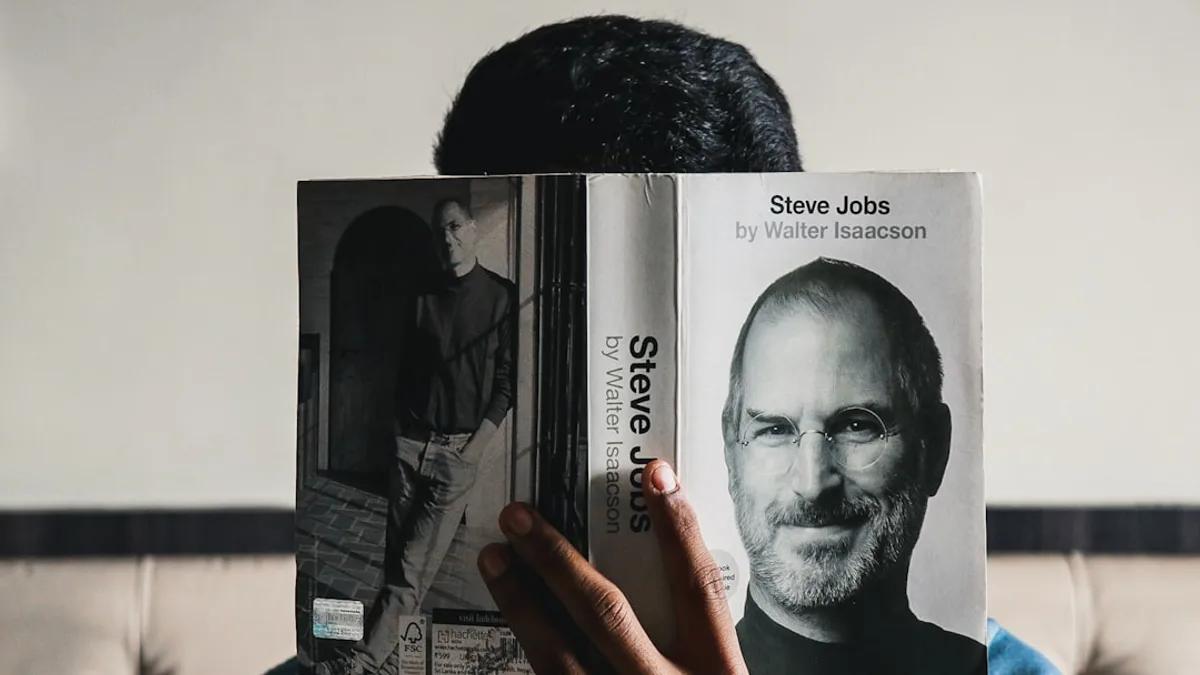
On May 20, 2026, Geoffrey Cain’s newly released Steve Jobs in Exile arrived as a direct challenge to the laziest version of the Steve Jobs story: genius falls, genius returns, Apple is saved.
That version is tidy. It is also too thin. Cain’s book, Steve Jobs in Exile: The Untold Story of NeXT and the Remaking of an American Visionary, argues for the messy middle — the NeXT years — as the part that made the comeback intelligible, according to 9to5Mac. My view: this is the Jobs chapter tech readers should revisit now, not because it flatters the myth, but because it makes the myth harder to believe in.
May 20, 2026: Cain Makes the NeXT Years the Missing Chapter of Apple’s Creation Myth
Most retellings of Apple history compress Jobs’s exile into a narrative bridge. He leaves Apple. He builds NeXT. Apple buys NeXT. Jobs returns. The iPod, iPhone, and iPad follow.
Cain’s book appears to reject that compression. Per 9to5Mac, it is split into three parts, with 28 chapters, an epilogue, a foreword by Dan’l Lewin, and an afterword by Ed Catmull. More importantly, Cain says in the acknowledgments that the book draws on interviews with:
“111 individuals who gave their time,”
That list includes NeXT cofounders Dan’l Lewin, Susan Barnes, Rich Page, George Crow, and Bud Tribble, plus Pixar cofounder Ed Catmull, NeXT alumni and former Apple executives Jon Rubinstein and Bertrand Serlet, photographer Doug Menuez, and former Apple executive Jean-Louis Gassée.
That matters because Jobs has been overexamined and undercomplicated. Cain’s advantage is not that he found another way to praise Jobs. It is that he seems to have found more people who saw him fail at close range.
1985 to 1997: Steve Jobs Learns the Hard Way Before Returning to Apple
Cain’s own book page frames the exile as a twelve-year stretch, from 1985 to 1997, after Jobs was “driven from the very corporation he had created.” It describes NeXT as a period of “spectacular failures, near-bankruptcy, and brutal humiliation” before Jobs returned to Apple.
That is not a detour. That is the plot.
The useful lesson is not that Jobs secretly knew everything all along. The useful lesson is that NeXT forced him into contact with constraints that early fame can blur: pricing, enterprise buyers, operational discipline, and the pain of building products that admired engineers may love but customers still do not buy at scale.
The National, which received an advance copy of the book, reports that Jobs poured millions of his own money into NeXT, recruited strong hardware and software talent, brought in Ross Perot as a board member, and spent $100,000 on the company’s logo by hiring Paul Rand. Yet the cube-shaped NeXT Computer was “too expensive” and sales were “far too low,” according to The National.
That is the part the founder mythology hates. Taste was not enough. Ambition was not enough. Even Jobs had to be corrected by the market.
The NeXT Years Read Like Serialized Drama Because the Stakes Keep Dropping
9to5Mac’s Marcus Mendes compares the book’s feel to a lost chapter, even invoking the idea of bad storytelling when a life skips too quickly from one defining stage to another. That is the right lens. The NeXT years were not filler. They had reversals, loyalists, skeptics, humiliations, and strange victories.
Cain’s reporting appears to give corporate decisions a human temperature. 9to5Mac says the book includes technical detail on WebObjects, bookkeeping, stock compensation, and object-oriented programming without treating readers as if complexity must be sanded down.
That combination is rare. Too many business books pick one lane: strategy memo or personality gossip. The better version shows how decisions felt to the people making them, without pretending every spreadsheet was merely a symptom of one man’s psyche.
Here, the drama is practical. NeXT shut down its hardware division several years before a 1996 WebObjects demonstration described by The National. At that event, Jobs used the software to order a pizza online through CyberSlice, one of the first food-delivery start-ups. The order worked. The delivery driver appeared. Reporters saw the demo.
It sounds small now. In the book’s context, it is more interesting: a humbled hardware company finding a software story.
NeXT Punctures Silicon Valley’s Favorite Shortcut: Calling Every Founder a Visionary
The word “visionary” gets abused after the winner is known. Cain’s book, at least from the reporting around it, seems valuable because it puts Jobs back before the ending was secure.
Here is the cleaner contrast:
| Jobs Myth | NeXT Evidence From the Book Coverage |
|---|---|
| Jobs simply willed the future into being | NeXT struggled commercially despite money, talent, press attention, and design ambition |
| Failure was a narrative pause before triumph | Cain frames the exile years as formative, not incidental |
| The comeback proves the founder was inevitable | The comeback looks more contingent when the middle years are restored |
| Jobs alone explains the story | The book draws on 111 individuals and foregrounds people who were in the room |
The strongest version of Jobs was not untouched by failure. He was altered by it.
The National also describes a tense episode involving John Perry Barlow, the Grateful Dead lyricist turned technology reporter, over NeXT selling computers to the U.S. federal government for purposes some viewed as tied to national security and spying. Cain writes:
“You want to talk about our marketing strategy … good, I want to talk about it too since you're confused,”
That is familiar Jobs: sharp, defensive, theatrical. But in exile, that temperament plays differently. It is not the swagger of a conquering CEO. It is a man trying to keep a hard story from collapsing.
Apple’s Second Act Runs Through NeXT, Not Just the Products Everyone Remembers
The Apple comeback is usually remembered through devices. Cain’s book pushes readers back toward infrastructure: software, process, and the people who carried NeXT’s work into Apple.
The National summarizes the mechanics plainly: Apple bought NeXT in 1997, used the company’s technology to create a new version of MacOS, and Jobs became Apple’s chief executive. That does not mean NeXT explains every later Apple product in a straight line. It does mean the acquisition was more than a personnel move. It brought technology and a battered founder back into the company at the same time.
For Apple readers trained to obsess over the next device cycle — whether in debates like All-Screen iPhone Could Make iPhone 18 Pro a $1,000 Trap or future Mac speculation such as MacBook Ultra Could Save MacBook Pro Users From Risk — Cain’s book offers a useful correction. The product is never just the product. The institutional memory behind it matters.
That is the practical value of revisiting NeXT. It reminds us that Apple’s second act did not begin with a keynote. It began with a company that struggled, adapted, and became useful in a way its original hardware business had not.
The Fair Critique: Another Jobs Book Can Feed the Same Personality Cult
There is a real objection here: do we need another book about Steve Jobs?
The tech canon already tilts toward founders. Engineers, designers, operators, investors, and customers often become supporting cast in a story sold through one face. Jobs is especially vulnerable to this treatment because his public persona was so strong and because Apple’s later success made every earlier scene feel prophetic.
That critique should not be dismissed. It is healthier to read Jobs through teams, timing, capital, and institutional knowledge than through personality alone.
But that is also why Steve Jobs in Exile sounds more necessary than another victory-lap biography. If Cain’s book works as described, it weakens hero worship by showing Jobs as unfinished: brilliant, yes, but also difficult, indecisive, dependent on others, and wrong often enough that the comeback had to be earned rather than assumed.
The Next Decision for Readers: Skip the Myth, Read the Middle
The real test of this book is whether readers treat it as nostalgia or as evidence.
Founders should read it for the humiliations, not the comeback. Apple obsessives should read it for NeXT’s software and people, not just Jobs’s return. Investors and operators should read it because the middle of a story is where reputations get audited.
Cain’s book appears to make one argument impossible to ignore: exile was not the empty space between two Apple eras. It was the pressure chamber.
The practical takeaway is blunt. Stop studying only the launch, the firing, the return, and the famous products. The middle is where the useful truth sits. Even Steve Jobs had to be remade before he could be remembered.
Why It Matters
- The book challenges the simplified comeback myth around Steve Jobs.
- Its focus on NeXT highlights how failure shaped Apple’s later success.
- The 111 interviews suggest a broader, more complicated account of Jobs’s exile years.